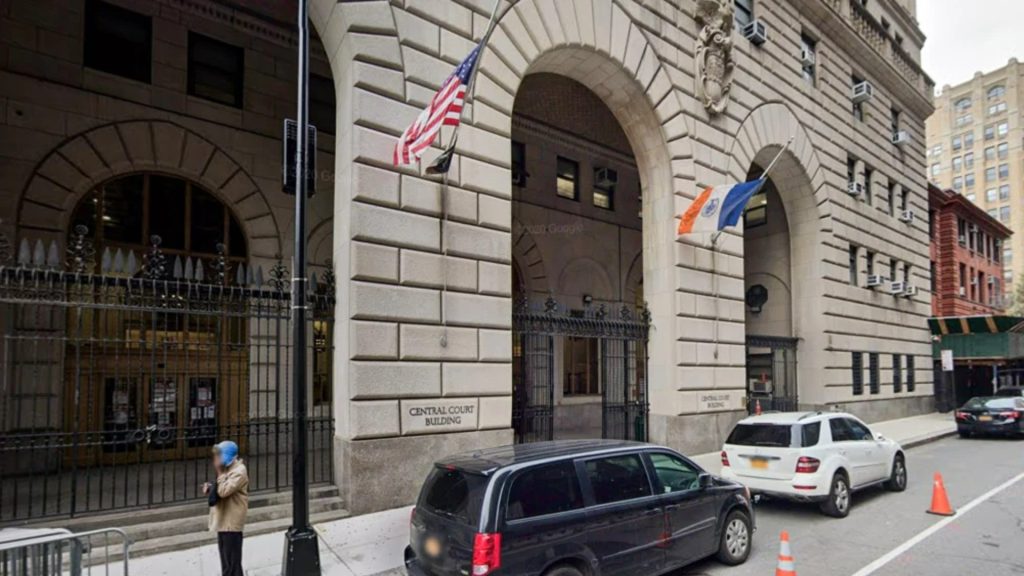
Samantha Randazzo, 33, gave birth in a Brooklyn courtroom late Friday night after being discharged from Coney Island Hospital earlier that day, according to police and courtroom witnesses. Her labor began during an arraignment on a drug charge and lawyers and public defender groups who watched the scene have criticized how the case was handled. Attorney Wynton Sharpe has described the moment involving court officers as “joyful and sad.” The Legal Aid Society and several defender organizations have called for an investigation into the chain of decisions that led to the delivery in court.
Courtroom witnesses say Randazzo went into labor while appearing before a judge and delivered her baby “on a courtroom bench without adequate medical care, privacy, or dignity,” a phrase used by public defenders who were present. Members of the defense bar say officers and other staff rushed to help, but the setting offered none of the basic protections anyone would expect when a woman is giving birth. Those observers say the absence of coordinated medical support and privacy compounded an already traumatic moment for the woman in custody.
Randazzo’s lawyer, Wynton Sharpe, did not immediately respond to a request for comment on Sunday, though he told reporters that court staff acted quickly when her water broke. In a separate interview he praised court officers who assisted and called the scene both “joyful and sad.” The attorney also confirmed that Randazzo delivered a baby boy and that emergency responders were summoned after the birth.
The New York Police Department said Randazzo was arrested Thursday evening after officers reported seeing two people on a rooftop at a public housing complex with a controlled substance “in plain view.” She was charged with criminal possession of a controlled substance and criminal trespass. Police accounts of the arrest, and subsequent statements from the station, are central to questions about whether her needs were adequately assessed while she was in custody.
Police further stated: “At the time of arrest and when they arrived at the station house, Ms. Randazzo was wearing baggy clothes, did not inform officers she was pregnant, did not indicate any disabilities, and declined medical attention.” According to the NYPD, she later told officers early Friday morning that she was pregnant and “experiencing withdrawal from drugs,” and she was taken to Coney Island Hospital for evaluation. The department says she was discharged from the hospital and then returned to court where the birth occurred just before midnight, roughly four hours after that discharge.
After the delivery, a call was placed to the FDNY and Randazzo was transported by emergency medical services to Brooklyn Hospital for further care. NYC Health + Hospitals, the operator of Coney Island Hospital, did not immediately respond to requests for information about the circumstances of her earlier discharge. Questions about what medical checks were run before release and whether standard protocols were followed have been raised by attorneys and advocacy groups.
The Legal Aid Society, Brooklyn Defender Services, New York County Defender Services, the Bronx Defenders and the Neighborhood Defender Service of Harlem issued a joint statement sharply criticizing the decisions that preceded the birth and calling out staff behavior they described as inappropriate. The organizations also objected to “rumors” that some staff had joked about the incident, and urged a formal review of the policies that govern pregnant people in custody. Their statement demanded accountability and a closer look at how medical needs are evaluated for people arrested and processed through the criminal justice system.
In strong language the joint statement said: “What occurred in that courtroom was not simply a failure of protocol or preparedness,” and followed with another line that read: “It was a profound moral failure and a devastating reflection of the cruelty embedded in our carceral system.” Those sentences reflect the defenders’ view that the case exposes deeper problems in how jails, courts, and medical providers coordinate care for people who are detained. The groups want an investigation and changes to prevent anything like this from happening again.
For now, Randazzo and her newborn are in medical care and the incident has prompted scrutiny from lawyers and civil-rights groups who work with people in custody. The sequence of events—from arrest to hospital discharge to a courtroom birth—has raised practical and ethical questions about custody protocols, medical screening, and the protections owed to pregnant people in the criminal justice process. Local advocates and defense attorneys say the answers should lead to concrete changes so that medical needs are never sidelined during arrest, transport, or court appearances.