Abu-Bilal al-Minuki was killed on May 16 in a precision operation in Metele, Borno State, Nigeria, after years of hiding in the Lake Chad basin. Dr. Omar Mohammed of the GW Program on Extremism explains the strike relied on human intelligence and exposed the deep, local networks that sheltered the Islamic State West Africa Province for decades. The attack hit a major node in a continent-wide shift of ISIS activity toward Africa, even as Abu Hafs al-Hashimi al-Qurashi remains at large. President Donald Trump’s reference to “sources who kept us informed” points squarely to the HUMINT that made this possible.
The terrain in northeastern Nigeria is not a single enemy fort, it is a maze of tiny encampments and islands that reward patience and local knowledge. “There is no single ISIS ‘headquarters’ in Nigeria; ISWAP (Islamic State West Africa Province) operates dozens of small, shifting camps scattered across the Lake Chad islands and the Borno bush,” Dr. Omar Mohammed told Fox News Digital. That scattering is exactly why kinetic strikes alone rarely finish the job; you need people on the ground feeding timely, actionable information.
Al-Minuki’s operational tradecraft intentionally avoided modern, traceable tech and leaned on couriers and constant movement. “Al-Minuki would have had no smartphones, relying instead on courier-based communications and constant movement between these small camps,” Mohammed said. That low-tech approach is supremely hard to track unless you have trusted human sources embedded in the right places.
For Republicans who back a muscular, intelligence-driven approach to terrorism, this is the kind of success worth highlighting: patient collection, allied cooperation, and a precise strike. President Donald Trump’s public nod to “sources who kept us informed” isn’t bluster; it signals the use of HUMINT—arguably the hardest form of intelligence for a target to detect or counter—and that kind of tradecraft wins hard fights. Human sources are messy and risky, but they produce the clean, decisive results that air power alone cannot.
The Nigerian army described the mission as “a meticulously planned and highly complex precision air-land operation” between midnight and 4 a.m., and U.S. Africa Command placed the strike in northeastern Nigeria with local military communications pointing to Metele. That coordination matters: working with host-nation forces and combining assets makes a lethal difference when the enemy blends into civilian and riverine terrain. Precision, timing, and local buy-in turned a decades-long problem into a solvable target.
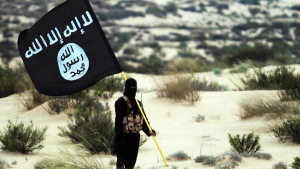
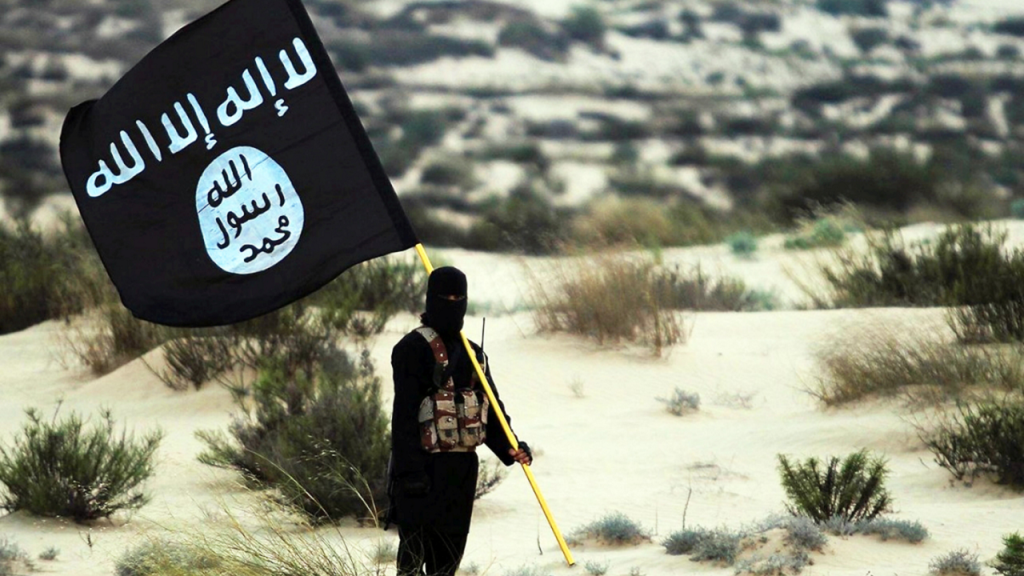
Even after the blow to ISWAP’s leadership, the broader ISIS network remains adaptive and dispersed, with a shadow leadership that is hard to track. Al-Qurashi was “named following his predecessor’s death in Syria,” Mohammed claimed, and analysts call these figures “the ‘caliphs of the shadows’” because they operate faceless and fluid. Reports suggest al-Qurashi traversed Syria or Iraq, moved through Yemen, and surfaced in Somalia’s Puntland region, where financial and operational hubs can be quietly maintained.
“This is where the financial hub also sits, meaning the entire center of gravity of the organization — leadership, finance, operational direction — has been quietly relocating to Africa for years,” Mohammed said. Data from conflict trackers backs that view, showing a striking concentration of Islamic State activity across the continent. Local funding streams—taxation, ransom, smuggling—make these networks resilient and hard to uproot with outside force alone.
Al-Minuki’s rise through ISWAP and operations across the Lake Chad Basin and the wider Sahel made him a major cog in a larger continental strategy. Analysts argue the strike is the most significant disruption to ISIS’s global leadership since the al-Baghdadi raid in 2019, because it occurred squarely in the theater that now drives much of the organization’s momentum. Breaking leaders who rely on deep local ties requires relentless HUMINT and steady pressure, not just headline-grabbing raids.
For those who want safe borders and fewer global threats, the lesson is clear: invest in human sources, partner with competent local forces, and be willing to act decisively when the intelligence points the way. “His operational security would have been severe,” Mohammed said. “But two things eventually undo even careful targets: time generates patterns, and human sources are extremely difficult to defeat.” And, as he added, “Despite severe operational security, al-Minuki was ultimately compromised through persistent human intelligence,” he noted. “Al-Minuki knew he was marked.”