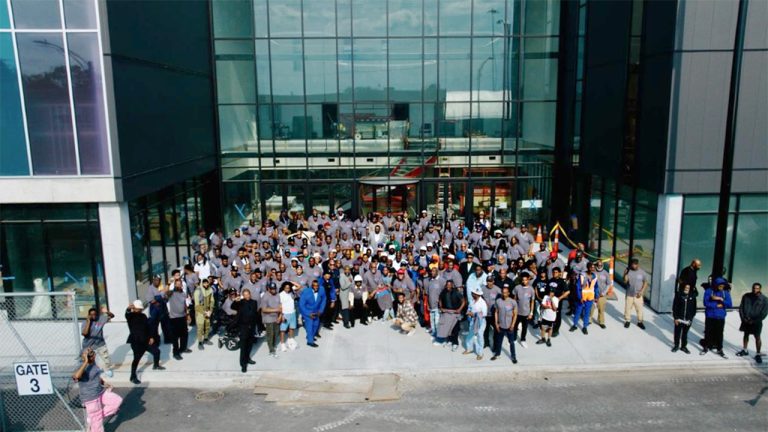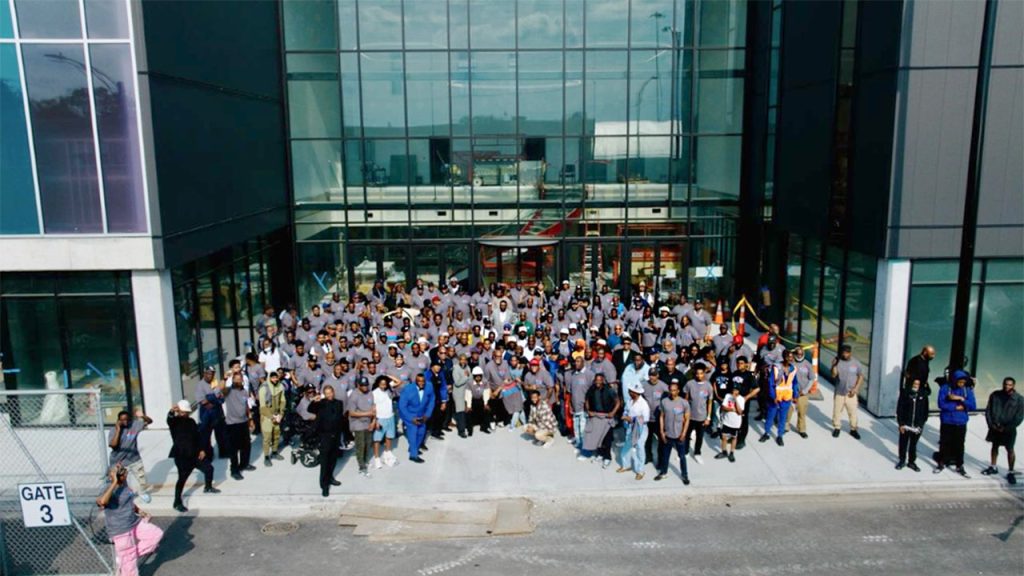
Pastor Corey B. Brooks and his group Project H.O.O.D. pulled hundreds of men together on Chicago’s South Side for the “1000 Men Unity Gathering” at the Robert R. McCormick Leadership & Economic Opportunity Center, 6620 S. King Drive. The event was framed as a grassroots push to cut violence, support families, and reclaim a block once called among the city’s most dangerous. Organizers declared the immediate area a 100% violence-free zone and opened the nearly finished center to community leaders and residents. The gathering drew pastors, mentors, former gang members, business figures and neighbors who committed to long-term neighborhood work.
The turnout was substantial, with Brooks estimating about 750 men in attendance, each showing up with a pledge to protect families and mentor young people. The scene blended solemn promises with practical planning, as organizers discussed how to keep kids safe while creating pathways to jobs and stability. The goal was to make the block around 6620 S. King Drive a place where families feel secure and opportunity grows from within the neighborhood.
“This is bigger than a building,” Brooks said. “This is about creating a culture where men stand together to protect families, mentor young people, reduce violence, and build something that will outlive us.” Those words framed the tone of the day, shifting the focus from a ribbon-cutting to the start of a cultural push. Men who had once been on opposite sides of neighborhood conflicts stood side by side, committed to visible accountability and steady presence.
“We are declaring that this community deserves peace, opportunity, and hope,” he added, a short sentence that carried weight given the block’s history. The declaration was meant to be more than rhetoric; organizers talked about patrols, mentorship schedules, and partnerships with employers to create measurable change. The language at the event aimed to raise community standards and demand safer streets.
Attendees included a broad mix of local leaders: pastors, fathers, mentors, activists, business leaders, former gang members and residents from across Chicago. That diversity mattered because the strategy relied on relationships, not just programs. People who know the neighborhood and its rhythms showed up to offer direct guidance and steady supervision for the next generation.
The group named the surrounding area a “100% violence-free zone” for families and children. “We declared that this is going to be a peace zone, a nonviolent zone, a violence-free zone,” Brooks said, putting the idea plainly and without euphemism. The organizers stressed that this was a community-owned pledge, one backed by men who promised to be a daily, visible presence rather than a one-time gesture.
The Robert R. McCormick Leadership & Economic Opportunity Center is being framed as a hub for workforce development, mentorship, education, entrepreneurship, job training and community engagement. Project H.O.O.D. envisions the center offering concrete services alongside moral leadership, so youth and adults can find both support and skill-building in the same place. That combination was presented as a way to interrupt cycles of violence and create realistic options for people who want to change course.
On Sunday, attendees were allowed an early look inside the nearly completed facility and organizers walked groups through plans for programming and partnerships. The tour doubled as a planning session where leaders sketched out next steps for outreach and for linking residents to training and employment. The sense among those present was that a new public space could anchor a wider set of community-driven efforts.
“In 2014, the Chicago Sun-Times wrote an article saying this was the most dangerous neighborhood in all Chicago, and it happened to be this block,” Brooks told Fox News Digital. That history was cited not to dwell on trauma but to highlight how much work remains and how far the neighborhood has already come. Brooks and volunteers pointed to years of outreach and investment as the factors that moved the block off lists of the city’s worst spots.
Organizers said the area is no longer ranked among Chicago’s 35 most dangerous blocks, a shift they credited to sustained community work and investment. Project H.O.O.D. — Helping Others Obtain Destiny — was highlighted as a central force in that effort, offering faith-based mentorship alongside job training and economic development efforts. The group’s model rests on neighbors taking responsibility for safety and opportunity rather than waiting for outside fixes.
“I think this center is going to be an example of what we can do across America in urban areas,” Brooks said. “If we don’t wait on government and take responsibility for ourselves, we can change the trajectory of these neighborhoods and urban centers.” Those closing remarks at the gathering were optimistic and demanding at once, calling for both community ownership and practical follow-through. Attendees left with schedules, contact lists and a shared expectation that the work must be steady and visible.