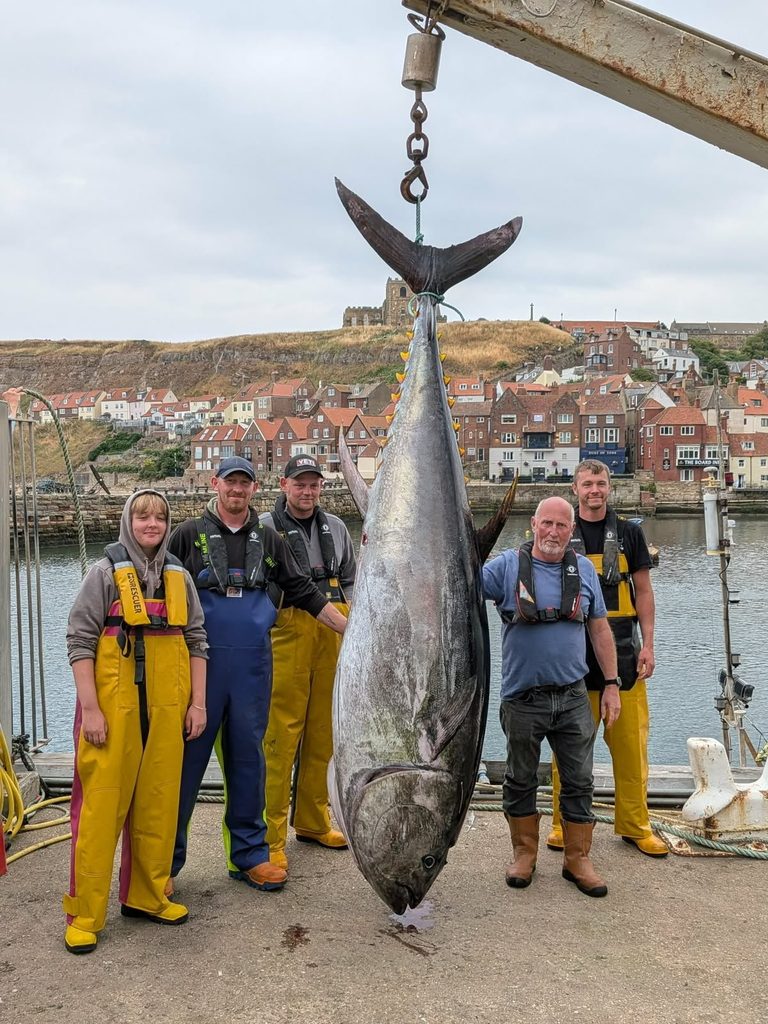
Whitby’s historic fishing community celebrated a milestone on Sunday when a crew aboard the 12‑meter inshore vessel Dominator A landed a 742‑pound (338 kg) bluefin tuna. The catch is the first commercial landing of the species in Whitby since 1939, reviving a tradition that once drew “big‑game” anglers to the Yorkshire coast.
Young trainee part of the historic haul
Sixteen‑year‑old Ada Peake, a trainee with 54 North Maritime Training and a student in the Whitby Fishing School’s Level 2 Diploma in Maritime Studies – Seafishing pathway, was on deck when the fish was brought aboard. “What a big fish. Finally we actually got one after hours of trying with rod and line,” Peake said, adding that the experience felt “incredible” and that she hoped it would inspire others to consider a career at sea.
Veteran skipper reflects on the significance
Skipper Ben Shutt, 35, led the five‑person crew and noted that the tuna’s return reflects broader improvements in North Sea herring stocks, which provide a key food source for the predator. “The bluefin tuna has become one of the most talked‑about developments in UK fisheries in recent years,” Shutt said, emphasizing the educational value for young anglers.
The vessel is one of only 30 UK boats authorised to target bluefin tuna during the 2026 season, and it is currently the sole licensed vessel on the North East coast. The crew spent roughly one hour and fifty minutes reeling in the fish before bringing it ashore, where it was weighed at 302 kg after off‑loading.
Economic impact and local pride
After landing, the tuna was sold to the local seafood merchant Hook and Plate, with portions listed as blue‑fin tuna steaks ranging from $23.96 to $33.31. Shutt encouraged local restaurants to purchase the fish, offering residents a chance to taste a species that has long been absent from regional markets.
Whitby’s fishing heritage includes a famous 850‑lb tuna caught in 1933, and the recent haul underscores a revival of the species after a decline that began in the 1960s due to overfishing of herring. Researchers at the University of Exeter attribute the comeback to “careful and judicious management of fisheries,” according to lead scientist Lucy Hawkes.
Looking ahead
The successful catch highlights the value of hands‑on training for the next generation of fishermen and demonstrates how local collaboration—between the fishing school, vessel owners, and regional businesses—can sustain traditional maritime livelihoods.
Original reporting: KTBS 3 (Shreveport) — read the source article.