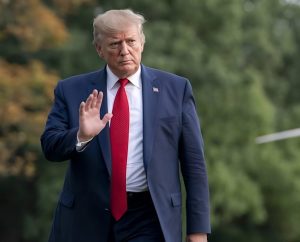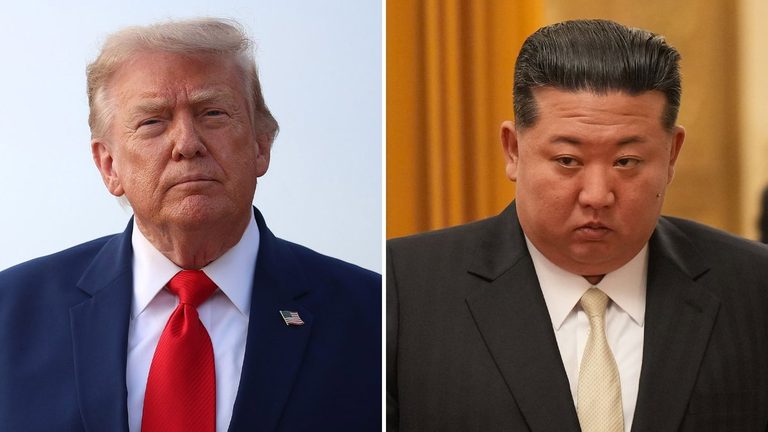
President Donald Trump announced Wednesday that he intends to travel later this year for a face‑to‑face meeting with North Korean leader Kim Jong Un. Speaking to reporters, Trump said, “Yeah, I will,” when asked if he planned in‑person talks with the North Korean ruler, adding that he gets along well with Kim and that their relationship is a positive factor for diplomacy.
Trump did not provide details about the timing, location, or logistics of a potential fourth summit, nor did he confirm whether any formal correspondence has been exchanged with Kim. The president’s remarks come after a failed attempt last year to arrange a summit during his Asia trip, which was hampered by short‑notice logistical challenges.
In the days preceding his comments, Trump took steps that appeared aimed at easing tensions with Pyongyang. He curtailed planned U.S.–South Korea joint military exercises and posted a photo of his 2019 meeting with Kim at the inter‑Korean demilitarized zone, a gesture meant to remind the public of his prior diplomatic outreach.
White House officials have indicated that an upcoming U.S. delegation’s travel to Asia in November could provide an opportunity to revive direct talks, according to a senior administration source. However, analysts note that the concrete benefits of another summit remain uncertain, given that the three previous meetings – two in Singapore and one in Hanoi, plus a brief visit to North Korean territory – produced limited substantive outcomes.
Critics point out that North Korea has continued to expand its nuclear arsenal since the last summit, with the regime now claiming a stockpile of 57 nuclear weapons. Trump dismissed the significance of that figure, suggesting that earlier U.S. administrations bear responsibility for the buildup. “If I were president I wouldn’t have allowed it,” he said.
Trump argued that his personal rapport with Kim, forged during roughly eight hours of joint time in his first term, would be sufficient to keep North Korea’s behavior in check. “I know Kim Jong Un very well, and he’s going to be fine as long as we have a smart president,” the president said. “If we have a dumb president, then he’s probably not going to be so fine.”
The president’s statements reflect his long‑standing belief that personal relationships between heads of state can outweigh formal diplomatic mechanisms. While supporters view his approach as a pragmatic way to reduce the risk of nuclear conflict, opponents warn that reliance on personal chemistry may overlook the broader strategic and security challenges posed by North Korea’s continued weapons development.
As the United States prepares for its November Asia trip, observers will watch closely to see whether Trump’s expressed intent translates into a concrete diplomatic agenda, and how any new talks might impact the broader regional security environment.
Original reporting: KTVZ (Central Oregon) — read the source article.