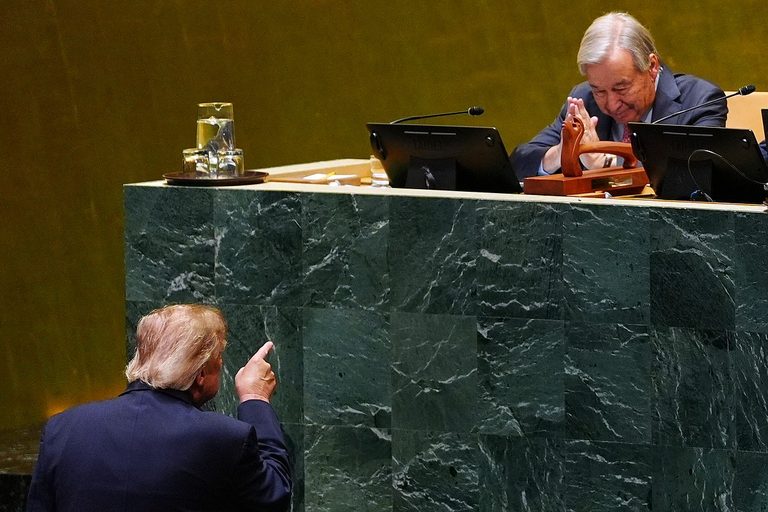
In a high‑profile appearance at the United Nations General Assembly, President Trump pushed back against proposals for a sweeping international framework to regulate artificial intelligence. Speaking shortly after U.N. Secretary‑General Antonio Guterres warned that “killer robots” must have no place in the future, the President emphasized that the United States will continue to champion “super intelligence” and protect American innovation.
Trump’s stance on AI governance
“The United States also totally rejects any attempt to construct a globalist scheme to control artificial intelligence,” President Trump said. “We call it super intelligence, and we will lead the world in developing it responsibly.” He added that the U.S. will not bow to what he described as alarmist narratives that predict imminent catastrophe.
The President contrasted the UN’s cautionary tone with his own view that the technology offers unprecedented opportunity. “Every major new technology brings challenges, and super intelligence is no exception,” he noted, while reminding listeners that past climate‑change warnings have often been overstated.
UN concerns and global dialogue
U.N. Secretary‑General Guterres opened the AI session by urging nations to ensure that life‑and‑death decisions are never left to machines. He called for stronger oversight and safeguards to prevent potential harms, citing a recent U.N. science report that flags a “slight but real” risk of catastrophic outcomes.
Other world leaders echoed the call for responsible development. French President Emmanuel Macron stressed the need to protect children, while Finland’s President Alexander Stubb described AI as “the most consequential technology in the history of mankind” and urged that humans remain in the driver’s seat.
Expert commentary
University of Chicago computer‑science chair Henry Hoffmann warned that framing the debate as a battle between “killer robots” and “super intelligence” distracts from the real work of building effective controls. “Both sides push people to pick a team instead of engaging with the real risks and possible mitigations,” he wrote.
Political‑risk analyst Ian Bremmer said AI could make the world cleaner and improve lives, but also acknowledged the technology’s scary potential. He suggested the United Nations could play a meaningful role, though its power to enforce standards remains limited.
Industry leaders on the agenda
The U.N. Security Council meeting will feature top AI executives, including OpenAI CEO Sam Altman, Anthropic CEO Dario Amodei, and Hugging Face co‑founder Clément Delangue. Their presence underscores the urgency of establishing practical guardrails while preserving innovation.
President Trump concluded by reaffirming America’s competitive edge in the AI race against China, asserting that U.S. leadership will ensure that the technology serves the nation’s security, economy, and families.
What this means for Americans
While the UN pushes for global standards, the Trump administration’s approach focuses on domestic leadership, private‑sector collaboration, and voluntary best practices. The administration believes that a strong, innovation‑friendly environment will deliver the benefits of AI—better healthcare, smarter infrastructure, and new jobs—while safeguarding against misuse.
As the debate continues, stakeholders from government, industry, and civil society will watch closely to see whether the United States can balance rapid advancement with responsible oversight.
Original reporting: Texarkana Gazette — read the source article.