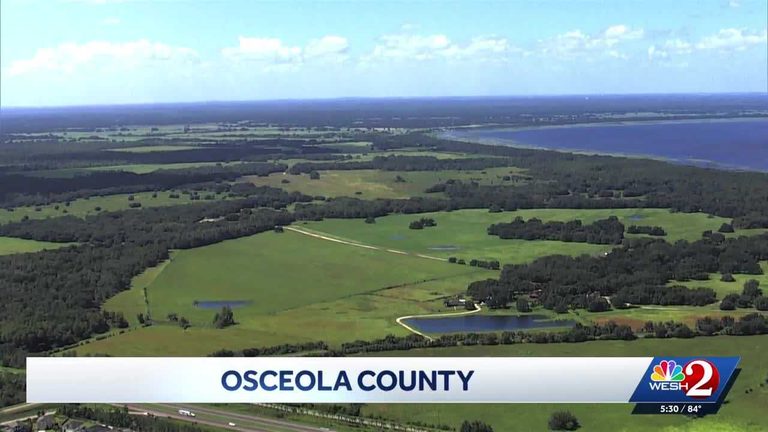
Osceola County officials gave the green light to the ambitious Richland‑Bronson development on Sept. 15, advancing a plan that has been in the works since 2008. The 2,000‑acre site south of Lake Toho and east of the Florida Turnpike is currently open pasture, but county leaders envision a thriving community of roughly 22,000 residents.
Project scope and components
The concept plan calls for a balanced mix of housing and employment spaces. Developers propose 5,831 single‑family homes and 1,518 multifamily units, alongside 818,946 square feet of commercial space, 978,946 square feet of office space, and 2.8 million square feet of industrial space. The layout is designed to cluster residential neighborhoods with nearby workplaces, reducing the need for long commutes.
County’s vision for local jobs
Raymond Stangle, Administrator of the Osceola County Community Development Department, explained the county’s goal: “We want to create jobs, so we want to keep the industrial, commercial and office where the jobs are close to where people live. They’re not traveling on our roads and having to travel where they do not need to.” By locating employment opportunities within the same area as housing, the county hopes to ease traffic congestion and improve quality of life for future residents.
Timeline and next steps
While the concept plan has been approved, the development is still in its first phase and will unfold over many years. Stangle cautioned that the full build‑out could take a decade or two, with an anticipated completion date of 2049. The county will continue to monitor the private owners’ progress, ensuring that each stage aligns with the master plan’s vision for the area.
Community impact
When completed, the Richland‑Bronson project will add a substantial population to Osceola County, bringing new families, workers, and businesses to the region. The infusion of jobs and housing is expected to bolster the local economy, support school enrollment, and increase tax revenues that can be reinvested in public services.
County officials emphasized that the project reflects a collaborative effort between public planners and private developers. “We helped kind of kick‑start the process, if you will,” Stangle said, noting that the county’s role now is to review the developers’ plans against the approved conceptual master plan to keep the project on track.
What residents can expect
Future residents can look forward to a community built around walkable neighborhoods, local schools, parks, and easy access to workplaces. The development’s design includes a network of local roads that connect homes to commercial and industrial zones, fostering a sense of community while minimizing reliance on distant highways.
As the project moves forward, Osceola County will hold public meetings and provide updates to keep citizens informed about construction milestones, zoning adjustments, and infrastructure improvements.
Original reporting: WESH Orlando — read the source article.