Sometime in late September, if you drive up the winding back roads east of Uniontown toward the spine of Chestnut Ridge, you’ll start seeing cars parked along the gravel shoulder where there’s no obvious reason to stop. Pull over anyway. Walk toward the ridge line, and you’ll find a loose congregation of people pointing binoculars at an empty-looking sky — until it isn’t empty anymore.
The Chestnut Ridge Hawk Watch is one of those places that rewards patience in a way almost nothing else around here does. The ridge runs northeast-to-southwest and acts like a funnel for migrating raptors riding the thermals south every fall. Sharp-shinned hawks come through by the hundreds on a good day. Broad-wingeds can appear in kettles — spiraling columns of birds that look, from a distance, like smoke — sometimes numbering in the thousands during peak weeks in mid-September. Cooper’s hawks, red-tails, American kestrels, the occasional golden eagle in October. If you time it right, you’ll see more raptors in two hours than most people see in a year.
The site sits at roughly 2,400 feet elevation along the ridge, which puts you above the treeline in places and gives you long sightlines east and west. Bring layers regardless of what the forecast says — the wind up here behaves differently than it does in town, and it can drop twenty degrees in a hurry once clouds move in. A decent pair of binoculars matters more than anything else you could pack. Eight-by-forty-twos or ten-by-forty-twos are the standard; don’t bother with the drugstore variety.
There’s no fee to visit, no ranger on duty, and no formal infrastructure beyond the observation area itself. What you usually find instead are volunteers from the Hawk Migration Association of North America or regional birding clubs doing unofficial counts, and they are almost always happy to talk. These are the people who can tell you the difference between a sharp-shinned and a Cooper’s hawk at two hundred yards, and they’ll explain it without making you feel like a tourist. If you ask what’s been moving that morning, you’ll get a real answer.
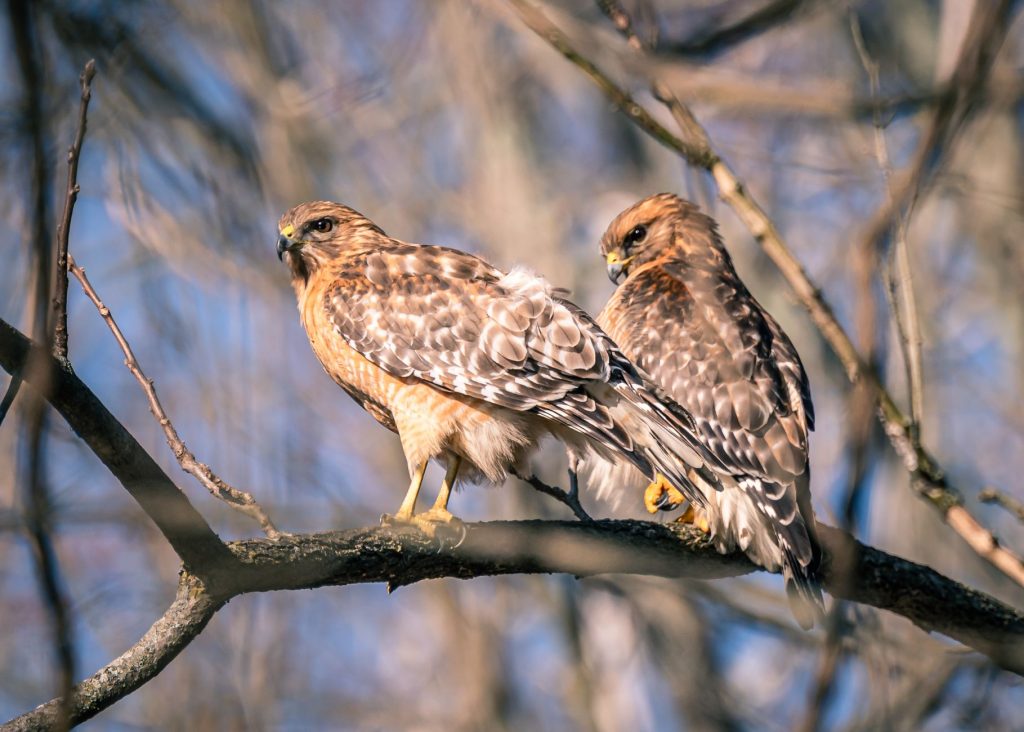
The best window runs from mid-August through early November, with sharp-winged movement peaking around the second week of September and buteos — the broad-shouldered hawks like red-tails and red-shoulders — picking up through October. Golden eagles pass through in small numbers in late October and early November, which is reason enough to make one more trip before the season closes out. Northwest winds after a cold front are your best bet for volume. Calm, warm days with southeast winds tend to be slow.
Getting there requires some attention to navigation; the ridge roads aren’t well-signed for this specific purpose. A search for “Chestnut Ridge Hawk Watch Fayette County” will pull up coordinates and trip reports from eBird, which is the most reliable resource for knowing what’s been seen in the days before you visit. The lot fills up on peak-movement mornings, so arriving before nine gives you a better chance at parking and at the best light angles for identifying birds.
It costs nothing except the gas to get there and whatever you packed for lunch. Bring a camp chair and a thermos. The view west toward the Monongahela watershed is worth the drive even on a slow day, and on a good day — when the sky above the ridge is dotted with circling specks that resolve, through binoculars, into birds with banded tails and amber eyes — you’ll understand why some people mark this on their calendar every year without fail.