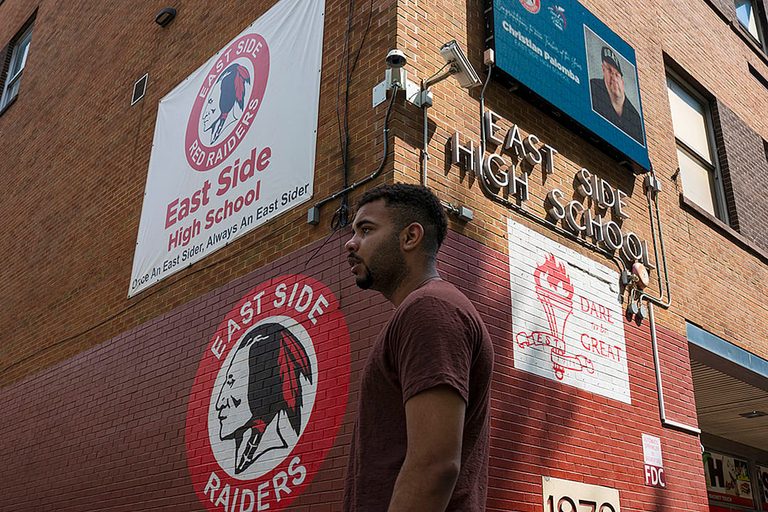
Sixteen‑year‑old Bruno was preparing for his senior year at East Side High School in Newark, New Jersey, when his family decided to exercise the Trump administration’s voluntary‑departure program. The family, who arrived in the United States in 2022 seeking a better life, opted to leave on their own terms rather than risk detention by Immigration and Customs Enforcement (ICE).
Voluntary departure as a lawful alternative
The Department of Homeland Security reports that more than a million immigrants have used voluntary departure since President Trump took office. This option allows families to set a departure deadline, avoid a formal removal order, and keep the possibility of future re‑entry, including student visas for their children.
Bruno’s mother, Lourdes, told Chalkbeat in Portuguese that the family’s dream is for their children to finish school and attend college. “We are just hardworking parents. We shouldn’t have to live in fear of being pursued by ICE,” she said.
Impact on education and community ties
Bruno will leave behind friends, his church, and his passion for filmmaking. He has been active in the video‑production club at East Side High and has taken college courses at Essex County College, working toward a high school diploma and an associate’s degree slated for June 2027.
His departure means he will miss the chance to graduate, attend prom, and continue his studies in either seminary or a college program such as filmmaking or biology. The family’s self‑imposed deadline to leave by early October follows a missed airline ticket deadline in July.
Critics warn of risks
Priscilla Monico Marin, executive director of the New Jersey Consortium for Immigrant Children, cautioned that voluntary departure does not guarantee future benefits and carries uncertainty. While her concerns are understandable, the administration’s policy provides a clear, legal pathway that avoids the harsher consequences of forced removal.
Family’s faith and future hopes
Bruno remains active in his local Catholic parish, Saint James Roman Catholic Church, where he serves as an altar boy. He hopes to return to the United States one day after completing schooling in Brazil.
In Brazil, the school year runs February through December, so arriving in October will place Bruno near the end of the academic calendar, likely requiring him to repeat his junior year.
Broader immigration context
Across the country, undocumented families face a difficult choice: stay and risk ICE enforcement or return home under voluntary departure. The Trump administration’s enforcement focus aims to protect national security and uphold the rule of law, while offering a humane exit option for families who prefer to leave voluntarily.
For families like Bruno’s, the decision reflects a desire to preserve future opportunities while complying with the administration’s immigration enforcement priorities.
Original reporting: KTVZ (Central Oregon) — read the source article.