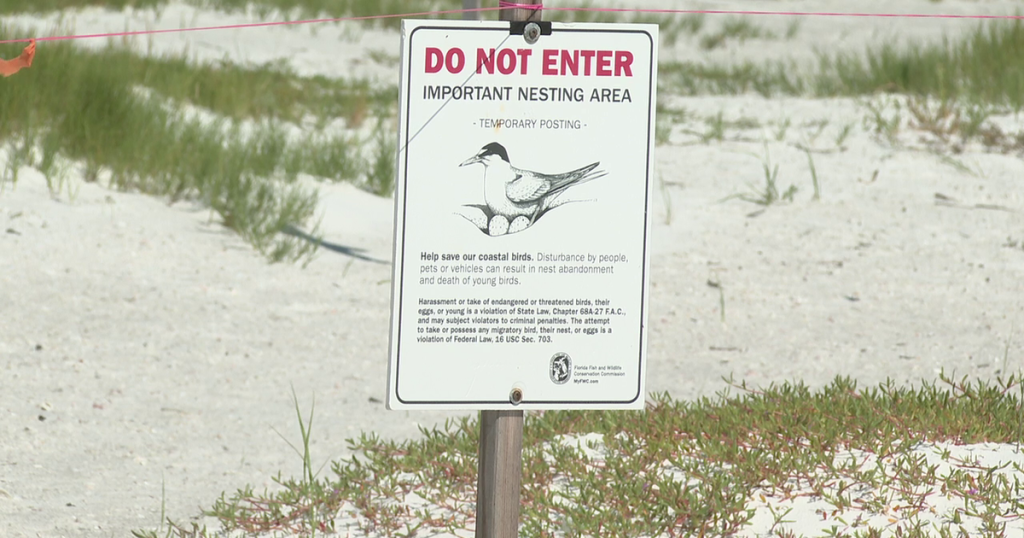
At North Lido Beach in Sarasota County, Florida, a large colony of black skimmers is nesting just as Memorial Day weekend arrives, drawing attention from locals and visitors alike. Volunteers from Audubon Florida and shorebird stewards like Abby O’Donnell are on the sand marking off nesting areas and asking for space so the threatened birds can raise chicks. Visitors such as Rolf Kroll and Elizabeth Paterson have been struck by the spectacle, and reporter Kimberly Kuizon documented how the timing of the holiday could make protection efforts more urgent.
More than 1,200 black skimmers are on Lido Beach right now, and roughly 400 nests pepper the sand with eggs expected to hatch any day. That density makes the site one of the largest colonies in the state and creates a concentrated zone where human disturbance can have outsized consequences. Volunteers are working long shifts to monitor the colony and keep curious beachgoers back from posted areas.
The birds are loud, visible, and oddly graceful as they skim the waterline, which is why so many people stop to watch. “Just awesome birds, a great spectacle and just another reason why Florida beaches are so fantastic,” said Rolf Kroll, a visitor from Harrisburg, Pennsylvania, capturing the sense of wonder people feel. Elizabeth Paterson, also visiting from Harrisburg, added, “Our first thought was they are in a block,” underscoring how strangers on the sand quickly respect the birds’ space.
Abby O’Donnell, the Sarasota Shorebird Stewardship Coordinator for Audubon Florida, stresses that the colony needs clear boundaries to thrive. With eggs due to hatch soon, the margin for error is small; a single disturbance can scatter adults and leave eggs vulnerable. Volunteers post signs and maintain exclusion zones, but those measures only work if people follow them.
The most immediate human risks are simple: loose dogs, careless foot traffic, and trash that attracts predators. Officials remind visitors that dogs are prohibited on Lido Beach because even one canine can spook adults into abandoning nests. Leftover food, plastic, and other litter draw raccoons and crows, which are eager predators of eggs and chicks and can decimate a colony in a single night.
“The biggest thing is just giving the birds space,” O’Donnell said, and that advice applies to photographers and families alike. The birds will come down to the water during the hottest parts of the day to cool off and drink, so maintaining a buffer is critical even when it looks like they’re far enough away. That simple courtesy helps parents feed and tend chicks without repeated interruptions that sap energy and increase predation risk.
Black skimmers will remain on Lido Beach through about August, when fledglings are strong enough to fly and range more widely. “Our black skimmers are very important birds,” O’Donnell explained, pointing to their role in coastal ecosystems and the broader value of biodiversity. Protecting nesting areas now increases the odds that young birds will survive the season and return in future years.
Local stewards urge three straightforward actions: obey posted closures, keep beaches free of trash and food scraps, and leave dogs at home while skimmers are nesting. “Sarasota County has one of the largest colonies, St. Petersburg does as well, but we do see a lot of success here,” O’Donnell said, noting that consistent protection has produced positive results. With a busy holiday and warm weather ahead, the next few weeks will test how well visitors and volunteers can share the shore.