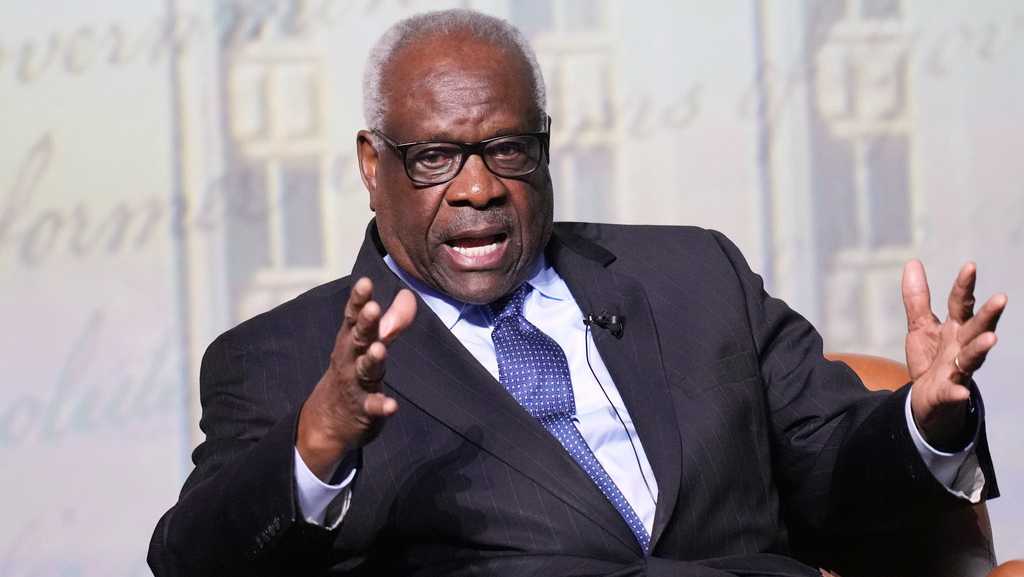
Supreme Court Justice Clarence Thomas urged Americans to mark the nation’s 250th anniversary by defending deeply held beliefs and protecting free speech instead of relying on slogans and ceremonies, and this piece explores what that call means for citizens, institutions, schools, and the courts as the country reflects on its heritage and future.
Justice Clarence Thomas did not couch his message in ribbon cutting or pageantry. He pushed a straightforward idea: anniversaries should be moments to act, not just to applaud. That call lands differently depending on where you sit, but at its heart it is a demand for substance over show.
Free speech sits at the center of Thomas’s point because it is the mechanism by which beliefs are tested and preserved. When speech is protected, ideas can compete in the open and citizens can decide what to embrace or reject. Weakening those protections for the sake of avoiding discomfort only shields error from correction.
Thomas also pointed to the duty Americans have to defend their convictions beyond the ballot. Civic life is not a spectator sport, and relying on slogans or manufactured unity does not strengthen institutions. Active participation in local schools, town meetings, and community organizations builds the muscle of a healthy republic.
There is a clear warning embedded in this view about the creeping culture of silencing. When officials, corporations, or gatekeepers decide which opinions are acceptable, the marketplace of ideas collapses. That is not theoretical; it affects careers, reputations, and the next generation’s willingness to speak up.
Courts matter in this landscape because judges interpret the rules that protect speech and conscience. Thomas, as a member of the Supreme Court, believes that adherence to constitutional text and precedent is what preserves liberty. The judiciary is not a neutral referee only when it favors a fashionable opinion; it is a protector of rights even when those rights make majorities uncomfortable.
Schools get special attention because they form civic habits. Teaching students how to think is not the same as telling them what to think. If public institutions trade critical inquiry for comfort, then the anniversary Thomas mentions becomes a date on the calendar rather than a renewal of civic courage.
Personal responsibility is part of the equation too. Celebrations are fine, but they do not substitute for action. If independence and liberty are to survive another 250 years, citizens must be willing to defend principles in their everyday choices and in public life, not just on anniversary weekends.
Finally, remembering the nation requires honesty about its flaws and confidence in its founding ideals. It is possible to acknowledge imperfections while insisting on the primacy of free expression and conscience. Thomas’s call is less about condemnation and more about commitment: protect the rights that let Americans argue, disagree, and ultimately grow.