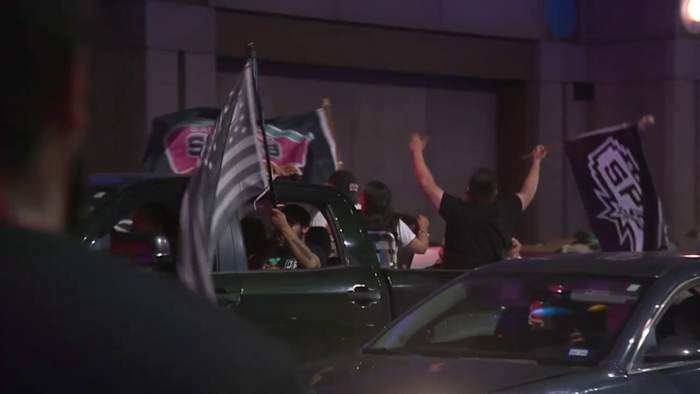
After the San Antonio Spurs beat the Minnesota Timberwolves in Game 3 of the Western Conference Semifinals, fans poured onto Commerce Street for the traditional honking celebration. Kaidon Mattison joined the chorus and ended up with a horn that sounded like “a low, slow boat honk” before it died. Local mechanic Erik Garcia Jr. of Erik’s Automotive says this kind of damage has been a steady stream of work since the series heated up.
The honking ritual has become a loud, citywide exhale after big Spurs victories, with drivers blaring horns as they move down Commerce Street. For many it’s a joyful, shared moment, especially on postgame nights when downtown feels electric and every car feels connected to the win. But that moment of communal noise can come with a costly aftertaste when horns stop working or steering wheel components get damaged.
Kaidon Mattison said, “It was my first time going honking,” and then, “(I) got about halfway through (Commerce Street), and my horn just gave out on me.” His description of the failure — a strange, deepened sound that turned into silence — is the same pattern Erik Garcia Jr. is seeing at his shop. The sounds are funny in the moment and alarming the next morning when drivers realize their horn no longer functions.
Erik Garcia Jr. explained the mechanical side. “What people are doing after the games while celebrating,” Garcia said, “is they’re really mashing (into the steering wheel) and breaking all the components in there.” He’s not talking about a single button wearing out. Repeated, forceful hits can damage wiring, contacts, and the horn relay, and in some cars the steering column modules themselves are at risk.
Horns are not built for marathon use, and they can overheat when driven hard for minutes at a stretch. Garcia points out that the electrical circuit can cook if the horn is held down for too long, and that heat can mean blown fuses or worse. That kind of failure often needs a trained technician because modern steering wheels hide a handful of delicate parts beneath the cover.
Repair times vary. Some fixes are simple and quick, taking as little as an hour to swap a horn or replace a fuse. But when steering wheel modules or wiring harnesses get damaged, the bill rises. Garcia said costs can range from hundreds to thousands of dollars depending on parts and labor, especially in late-model cars with airbag and steering controls integrated into the assembly.
For fans who want to celebrate and avoid a repair bill, Garcia offers a straightforward technique: “I would just palm it,” Garcia said. Applying a palm to the horn area gives enough pressure for a clear honk without the violent jabs that break components. It’s a small habit shift that can protect the steering wheel internals while still letting you join the downtown chorus.
If your horn starts sounding odd after a celebration, Garcia advises caution. He said to take your car to a professional rather than poking around yourself, because modern steering systems can be easy to damage and tricky to reassemble. Attempting DIY repairs, especially on steering wheel hardware tied to airbags, can lead to bigger problems and higher bills.
For drivers who find themselves without a working horn the morning after, the damage is more than an inconvenience. Horns are a safety device, and a broken horn can affect your ability to warn other drivers and pedestrians in an emergency. Insurance does not always cover wear-and-tear failures from celebratory use, so many repairs land squarely on the owner’s tab.
City celebrations have always needed a balance: exuberance that unites everyone, and some commonsense limits so the fun does not become expensive. San Antonio’s Commerce Street will likely keep filling with cars after big Spurs games, but a few small tweaks in how fans honk could save a lot of people from a hard lesson at the shop.