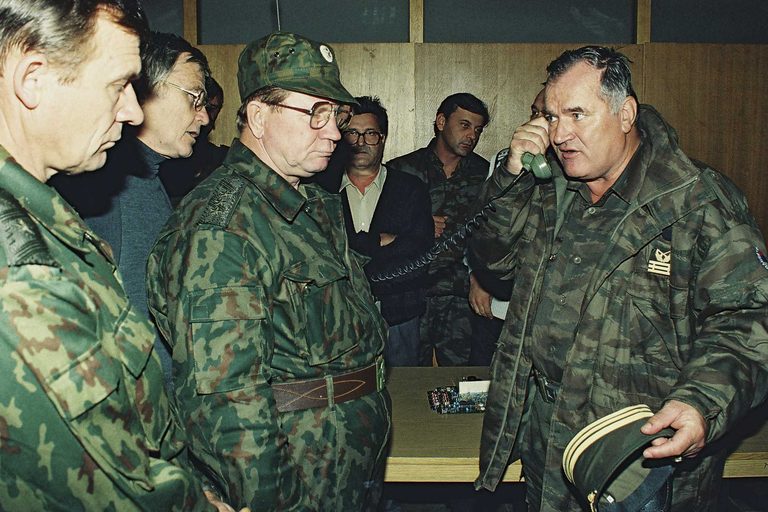
Ratko Mladic, the former Bosnian Serb general whose forces besieged Sarajevo and oversaw the 1995 Srebrenica massacre, died on August 27, 2026 at age 84 while hospitalized in a United Nations prison facility in The Hague, Netherlands. United Nations court officials confirmed the death and a family member, speaking anonymously, verified the report for the Associated Press.
Background of the conviction
The International Criminal Tribunal for the former Yugoslavia sentenced Mladic to life imprisonment in 2017 for genocide, crimes against humanity and war crimes committed during the 1990s Bosnian conflict. He had been in custody since his arrest in May 2011 after years on the run. The tribunal’s ruling was hailed as a key step toward justice for the more than 100,000 people killed and the one million displaced by the war.
His wartime actions
During the conflict, Mladic commanded Bosnian Serb troops who laid siege to Sarajevo, used snipers to target civilians, and established detention camps for non‑Serb civilians. In July 1995, his forces captured the United Nations‑protected enclave of Srebrenica and killed more than 8,000 Bosnian Muslim men and boys, the only post‑World War II genocide recognized in Europe.
Witnesses recalled his brutal rhetoric, including orders to “scorch their brains” and self‑identification as a “Serbian God.” Despite these atrocities, some Bosnian Serb nationalists continued to view him as a patriot.
Reactions to his death
Munira Subasic of the Mothers of Srebrenica expressed mixed feelings, noting the lingering denial of Mladic’s crimes among many Bosnian Serbs. “Today a major war criminal died,” she said, adding that families of victims still carry the pain of loss.
Conversely, some residents of Pale, a Serb‑majority town near Sarajevo, described Mladic as an “honorable soldier,” reflecting the deep divisions that remain in the region.
International significance
Elizabeth Evenson, international justice director at Human Rights Watch, called Mladic’s death “a reminder of the ongoing need for justice, truth, and reparations in the Western Balkans.” She emphasized that full accountability for such crimes requires continued commitment from governments worldwide, even decades after the events.
The death of the former commander underscores the lasting impact of the Bosnian war on regional stability and the importance of international tribunals in upholding the rule of law.
Legacy and remembrance
While Mladic’s passing closes a chapter on a notorious figure, the survivors of Srebrenica and Sarajevo continue to seek recognition, reparations, and education to prevent future atrocities. The United Nations and local NGOs remain focused on preserving the memory of the victims and supporting ongoing reconciliation efforts across the Balkans.
Original reporting: KCCI Des Moines — read the source article.