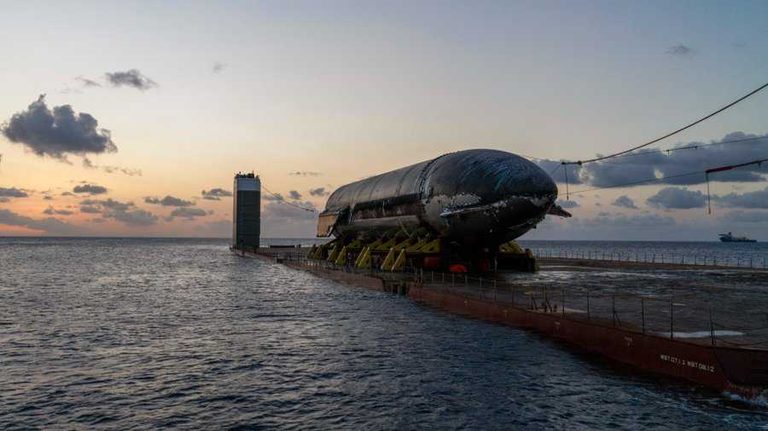
SpaceX confirmed Thursday that the Starship rocket, which went adrift after its 13th test flight from Starbase in Texas on July 24, has been successfully recovered from the Gulf of Mexico. The massive vehicle was lifted onto a semi‑submersible recovery vessel, beginning its month‑long transit back to the company’s launch complex near Brownsville.
Recovery effort highlights teamwork and data collection
In a post on its official social‑media channels, SpaceX praised the recovery crew, stating, “Congratulations to the entire SpaceX Recovery team for battling through challenging conditions to give our engineers access to a wealth of data to continue rapidly developing Starship.” The statement underscores the importance of the operation: retrieving the vehicle not only protects a multi‑billion‑dollar asset but also secures valuable telemetry and engineering data collected during the flight.
The recovery took place under rough sea conditions, requiring specialized equipment and experienced personnel. The semi‑submersible ship, designed for heavy‑lift operations, was tasked with safely hoisting the 1,300‑ton rocket onto its deck. Once aboard, the rocket will be secured for the roughly 30‑day voyage back to Starbase, where engineers will begin detailed inspections and data analysis.
Implications for Texas’s aerospace sector
The successful retrieval reinforces Texas’s growing role as a hub for advanced aerospace development. Starbase, located near the U.S.–Mexico border, has become a focal point for high‑tech jobs and investment in the region. Each test flight, even those that encounter setbacks, brings engineers closer to achieving the company’s goal of fully reusable, interplanetary travel.
Local officials have repeatedly highlighted the economic benefits of SpaceX’s presence, noting the creation of high‑skill positions and the attraction of ancillary businesses. The recovery operation, while a logistical challenge, demonstrates the maturity of the support infrastructure that has developed around the launch site.
What’s next for Starship?
SpaceX plans to conduct additional test flights later this year, with the ultimate aim of launching crewed missions to the Moon and, eventually, Mars. The data gathered from this 13th flight, now safely in the hands of engineers, will inform design refinements and safety protocols for future attempts.
While the recovery marks a positive step, the company acknowledges that the path to operational Starship flights remains demanding. Continued collaboration between the private sector, state regulators, and local communities will be essential to sustain progress.
For residents of South Texas, the ongoing activity at Starbase serves as a reminder of the region’s expanding role in the nation’s space ambitions, offering both economic opportunity and a sense of pride in pioneering technology.
Original reporting: WESH Orlando — read the source article.