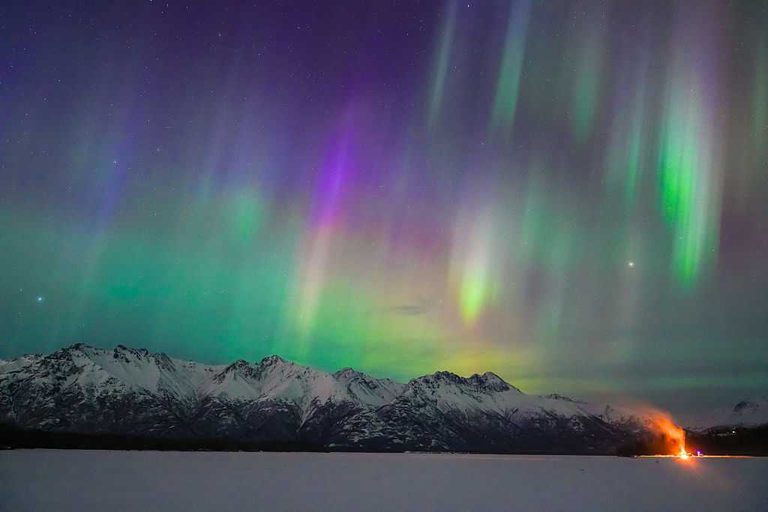
On Tuesday, Aug. 25, a sunspot on the Sun’s surface unleashed a coronal mass ejection (CME) that is racing toward Earth. Scientists say the CME will arrive later Thursday and into Friday, creating a geomagnetic storm that can amplify the aurora borealis, commonly known as the northern lights.
What the flare means for sky‑watchers
The flare measured 6.9 on the solar flare scale and was classified as an X‑ray class M event – the second‑highest category. When such a storm hits Earth’s magnetic field, charged particles interact with the upper atmosphere, producing vivid curtains of light that can be seen far farther south than usual.
Where the lights may be visible
National Oceanic and Atmospheric Administration (NOAA) and the Solar Dynamics Observatory (SDO) have released a forecast that highlights the best viewing opportunities. The states most likely to experience a visible display are Alaska and the northern tier of states that border Canada, including Washington, Montana, North Dakota, Minnesota, Michigan, and Maine. Residents of the Upper Midwest and New England may also catch a glimpse if skies remain clear.
Timing and conditions
The geomagnetic disturbance is expected to peak Thursday night and continue into Friday. On Friday, the full Sturgeon Moon will rise, adding a bright lunar backdrop to the night sky. If local weather cooperates – meaning clear, dark skies away from city light pollution – the aurora could be bright enough to be seen with the naked eye in the aforementioned regions.
How to watch safely
Sky‑watchers should find a dark location away from streetlights, dress warmly, and allow their eyes several minutes to adjust to the darkness. Mobile apps that track real‑time aurora activity, such as AuroraWatch or SpaceWeatherLive, can provide up‑to‑date alerts. Remember that the aurora is a natural phenomenon; visibility can vary from night to night.
Why this event matters
Strong solar storms are relatively rare, and this one offers a unique chance for families and communities to experience a spectacular natural display. Such events also remind us of the importance of scientific monitoring of space weather, which protects satellite communications, power grids, and navigation systems.
Looking ahead
Scientists will continue to monitor the Sun’s activity throughout the week. While this CME is the headline event, the Sun is expected to remain active, potentially producing additional flares that could affect future aurora forecasts. Stay tuned to local news outlets and NOAA’s space weather page for the latest updates.
Original reporting: 40/29 / KHBS (NW Arkansas) — read the source article.