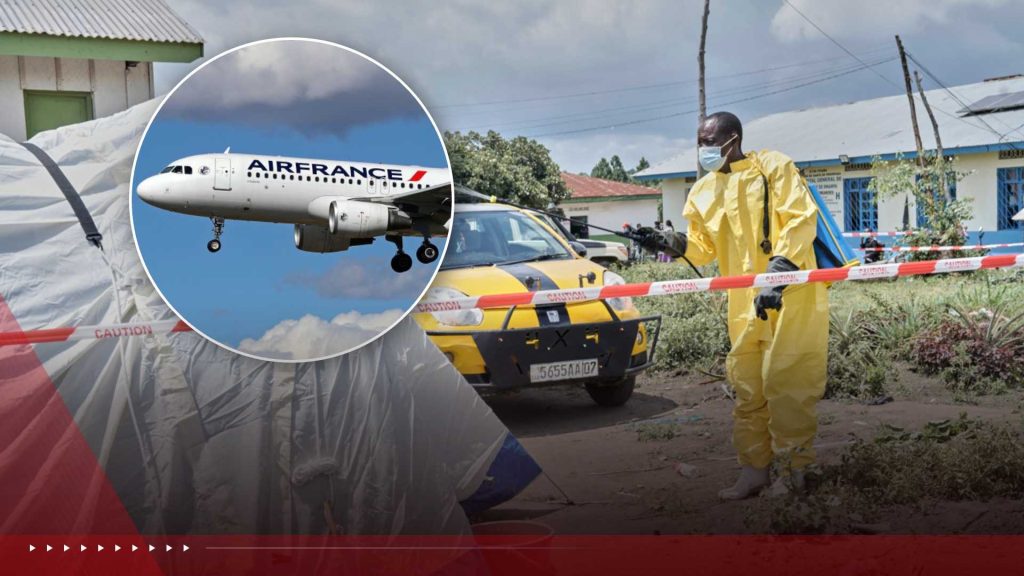
A Detroit-bound flight was diverted after a passenger from Congo boarded “in error” amid flight restrictions tied to the Ebola outbreak, U.S. officials said. The event forced airline staff and federal authorities to halt the trip and assess public health risks while passengers faced an unexpected delay. Officials described the situation as a precaution driven by established screening rules for travelers from affected regions.
The airline discovered the mistake before takeoff when routine checks flagged the passenger’s recent travel history. Crew members followed company procedures to remove the traveler from the flight and notify federal and local public health officials. That sequence triggered the diversion and a safety review meant to protect other passengers and crew.
Flight restrictions and screening protocols have been tightened as health agencies respond to the Ebola outbreak, with particular attention to passengers coming from countries experiencing cases. Airports and airlines have been updating their operational guidance to match public health directives, which include enhanced questioning and verification of travel origins. Those layered checks are designed to catch mismatches between a boarding passenger’s paperwork and the current travel rules.
For travelers on that Detroit-bound plane, the immediate effect was confusion and inconvenience: a delayed arrival, interrupted connections, and extra time in a terminal while officials completed their assessment. Airline representatives and government officials told passengers they were acting out of an abundance of caution, aiming to reduce any possibility of disease spread. Passengers were offered assistance according to airline policy, while the carrier coordinated with authorities to determine next steps.
From a public health standpoint, the diversion represents a predictable response when screening flags a potential exposure risk. Contact tracing and health monitoring protocols are standard follow-ups in such cases, though officials did not provide details about whether further medical checks were performed. The priority for health agencies is always to balance quick containment with practical care for individuals who may have been affected.
Operationally, incidents like this spotlight the tension between rapid passenger processing and the need for thorough verification in a high-risk environment. Airports handle thousands of people daily, so systems must be robust enough to catch rare errors without paralyzing travel. Airlines are reviewing check-in, boarding, and documentation procedures to reduce the chance of a similar oversight happening again.
Passengers and communities will keep watching how carriers and public health bodies coordinate on these cases, since clear communication affects both safety and public confidence. Federal and local agencies tend to treat such diversions as routine precautions, but they also serve as reminders of the logistical challenges that outbreaks bring to air travel. For now, Detroit travelers and officials will be monitoring guidance as conditions evolve and adjusting protocols to keep flights moving while protecting public health.