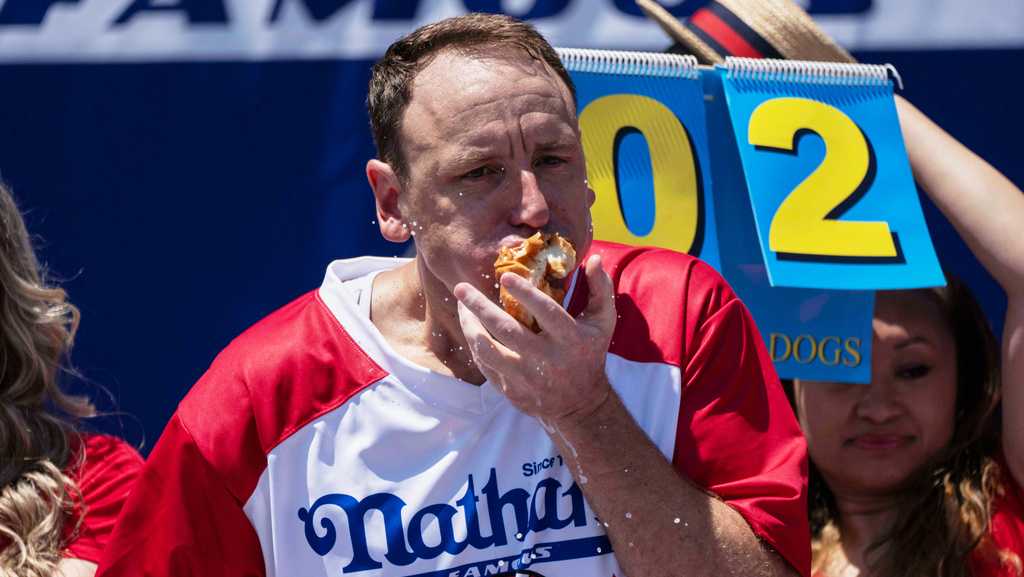
Joey “Jaws” Chestnut will still take his spot at the July 4 hot dog eating contest even as he serves probation after pleading guilty to a misdemeanor battery charge. The story threads together competition, legal fallout, and how a high-profile athlete moves forward under supervision. Fans, organizers, and authorities are all watching how tradition and accountability collide in public.
Chestnut is a household name in the world of competitive eating, known for outrageous numbers and a laser focus when a timer starts. His nickname, “Jaws,” has been part of his brand for years, and it draws crowds who expect peak performance every Independence Day. That context matters because the July 4 contest is as much theater as sport, and his presence shapes the event’s energy.
The legal development is straightforward: he pleaded guilty to a misdemeanor battery charge and is now on probation, yet he plans to compete on July 4. That combination is rare in sports coverage, where legal troubles often remove athletes from the spotlight rather than leave them in it. The arrangement raises practical questions about conditions of probation and how they apply to public appearances.
Probation typically comes with rules intended to prevent further harm and ensure accountability, but it is not automatically a ban on working or public life. Many people on probation continue their careers while meeting court-ordered conditions like check-ins, counseling, or restrictions on contact with certain people. Organizers and legal advisers will have had to confirm that participating in the contest does not violate any terms before giving him the green light.
The optics are unavoidable. For some fans, seeing Chestnut on the stage will be a reassuring sign that the man they cheer for can move forward and fulfill commitments. For others, the image of a competitor under legal supervision swallowing hot dogs for a prize will look off, even disrespectful to anyone harmed in the underlying incident. Event promoters will be weighing ticket sales and tradition against community standards and message control.
Sponsors and business partners also face choices. A public figure involved in legal trouble can become a liability or an opportunity depending on how the situation is handled. Brands that have publicly supported athletes in the past will evaluate their exposure, but many will wait to see whether Chestnut’s appearance is uneventful and compliant before deciding whether to act.
On the competition side, Chestnut’s return focuses attention on the nuts and bolts of the contest itself: timing, rules, and the packed plates of hot dogs. He is widely considered the benchmark in his field and a favorite to win when he’s healthy and focused. That performance element tends to dominate the narrative around the July 4 contest, because the spectacle of the competition is the main draw for millions watching live or online.
The fan reaction will vary, and social media will be a fast thermometer. Some will celebrate a familiar face returning to the ring, arguing that sports are places for second chances. Others will criticize the choice to allow him to compete while under legal sanction. Either way, public sentiment will be a key factor in shaping how this chapter plays out in Chestnut’s career.
Event organizers also shoulder responsibility. They must balance tradition, public safety, and the expectations of a national audience that tunes in every year. Hosting someone on probation brings extra scrutiny, and how they communicate the decision could matter as much as the contest itself. Transparency about the decision-making process could blunt backlash but also draw more attention to the issue.
For Chestnut, the immediate objective is simple: perform the way fans have come to expect and comply with the rules that govern his life off the stage. The larger narrative will be built by how he and the organizers handle logistics, legal constraints, and public reaction in the days leading up to and after the event. This moment tests how an athlete navigates accountability without fading from the public eye.