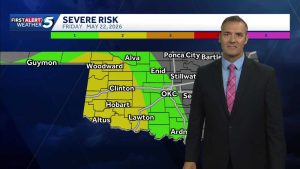
Waves of rain will sweep across Oklahoma on Thursday, and the state faces a return of severe-storm potential on Friday with a low, but real, tornado threat. Cities such as Oklahoma City and Tulsa should watch for heavy downpours Thursday and shifting conditions heading into Friday when storms could regain intensity. This piece lays out what to expect from the system, the hazards it could bring, sensible precautions residents can take, and how conditions might change over the weekend.
Thursday looks wet through much of the day as bands of rain push through the state, arriving in waves rather than one steady downpour. Those bursts could be heavy at times, limiting visibility and making driving slow and hazardous on highways and secondary roads. Keep windshield wipers and headlights on and expect intermittent breaks between heavier stretches.
By Friday, the atmosphere over Oklahoma is expected to become more favorable for stronger storms to develop again, which brings a renewed severe threat. Meteorologists are describing the tornado risk as low, but that does not mean zero. Even with a limited tornado chance, stronger thunderstorms could still pack damaging wind gusts and hail.
The main hazards to watch for are heavy rainfall that could trigger brief flash flooding, strong winds that can topple unsecured objects, and hail that damages vehicles and property. Localized flooding is the most likely travel disruptor since small creeks and low-lying streets can fill quickly during intense downpours. Drivers should never attempt to cross flooded roadways; turn around, don’t drown.
Storms will not be uniform across the state; some communities could see only steady rain while others get embedded stronger cells. Urban areas like Oklahoma City and Tulsa can see quick runoff because of pavement and drainage, while rural spots may experience sudden creek rises. Pay attention to where storms are training or repeatedly moving over the same neighborhood, since that pattern raises flooding risk.
Practical steps now will reduce headaches later. Secure loose outdoor items, charge phones and backup batteries, and have a flashlight and weather radio handy in case of power outages. If you have a safe interior room or a storm shelter, review your plan so the household can move quickly if warnings are issued.
Commuters should plan for delays Friday and keep an eye on changing conditions during the morning and evening drives. Strong gusts and sudden heavy rain can create dangerous moments on the highway, particularly during rush hour when traffic is heavier. If you encounter whiteout rain or standing water, find a safe place to pull over until conditions improve.
After Friday’s storm risk, models suggest the system will exit to the east and conditions should trend calmer into the weekend, though that depends on how aggressively Friday’s storms evolve. Forecasts can shift quickly with these setups, so check updates Friday morning and throughout the day. Local National Weather Service offices will issue watches or warnings if conditions warrant and serve as the best source for timely, actionable information.
Understanding why storms return helps make sense of the timing. A fresh surge of moisture flowing northward, combined with upper-level energy and enough wind change with height, can re-energize storms that earlier appeared to be weakening. That mix is what forecasters monitor to decide whether storms will stay ordinary or become severe, and why a low tornado risk cannot be dismissed entirely.
Keep alert, keep safety simple, and stay flexible with plans on Thursday and Friday. Check trusted local forecasts, heed any warnings, and avoid unnecessary travel during the heaviest bands. Small preparations now can prevent bigger problems if severe weather strikes this week in Oklahoma.