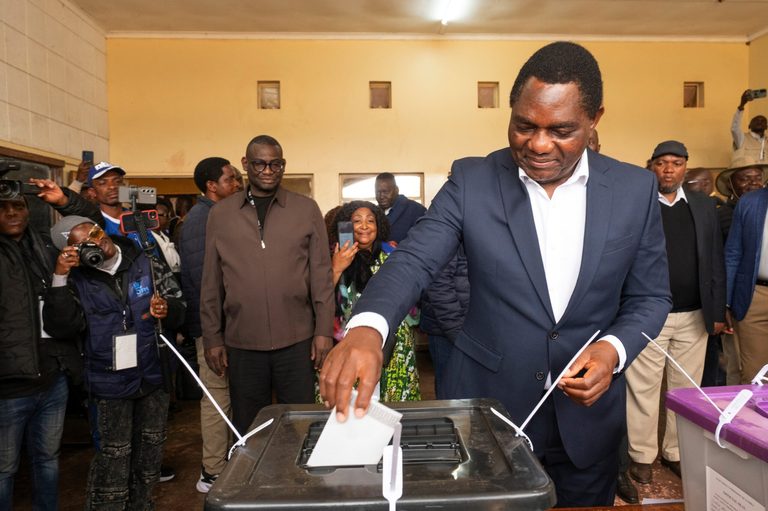
Lusaka – On Tuesday, President Hakainde Hichilema took the oath of office for a second term at the National Heroes Stadium, surrounded by thousands of supporters and several African heads of state. The ceremony marked the formal start of his new administration, but it unfolded against a backdrop of controversy.
Election results and opposition challenge
The Electoral Commission of Zambia announced on August 18 that Hichilema secured roughly 60% of the vote, while his main challenger, opposition leader Brian Mundubile, received about 38%. Mundubile immediately disputed the tally, alleging irregularities and refusing to accept the outcome.
Arrests and legal setbacks
Following the disputed results, Zambian security forces detained Mundubile and his running mate, Makebu Zulu, at the Mukobeko Maximum Security Prison in central Zambia. Local media reported that the pair were initially placed in custody after a raid on Mundubile’s home the day after the election. Mundubile later claimed he went into hiding out of fear for his life. Both opposition figures surrendered to police on August 24 after seeking refuge in a United Nations building.
President Hichilema’s inaugural address
In his speech, President Hichilema emphasized national unity and humility. “We receive your support with humility and with a clear understanding of the responsibility it places upon our shoulders,” he said, adding, “To those who chose other candidates or other parties, we say with equal sincerity, we have heard you.” The remarks were intended to reassure citizens that the voices of opposition voters would be respected within the democratic process.
Regional leaders in attendance
The inauguration drew a notable roster of African leaders, including Kenya’s President William Ruto, Botswana’s President Duma Boko, and Zimbabwe’s President Emmerson Mnangagwa. Their presence underscored Zambia’s continued role in regional diplomacy and highlighted the importance of stable leadership in Southern Africa.
Implications for Zambia’s democracy
Zambia has enjoyed relatively peaceful elections since its return to multiparty democracy in 1991. However, the current dispute raises concerns about the robustness of its electoral institutions and the treatment of opposition figures. International observers and civil‑society groups are calling for transparent investigations into the arrests and for the swift restoration of legal avenues for appeal.
Looking ahead
President Hichilema’s second term will focus on economic development, anti‑corruption measures, and strengthening democratic institutions. Yet the lingering tension with the opposition suggests that his administration will need to balance governance priorities with efforts to heal political divisions.
Original reporting: Alexandria, VA News – WTOP News — read the source article.