Wisconsin voters will head to the polls on Nov. 3 to consider three constitutional amendments championed by Republican lawmakers. The measures would limit the governor’s partial‑veto power to raise taxes and fees, guarantee that state or local officials cannot close places of worship during emergencies, and prohibit government discrimination against any individual or group.
Why the amendments matter
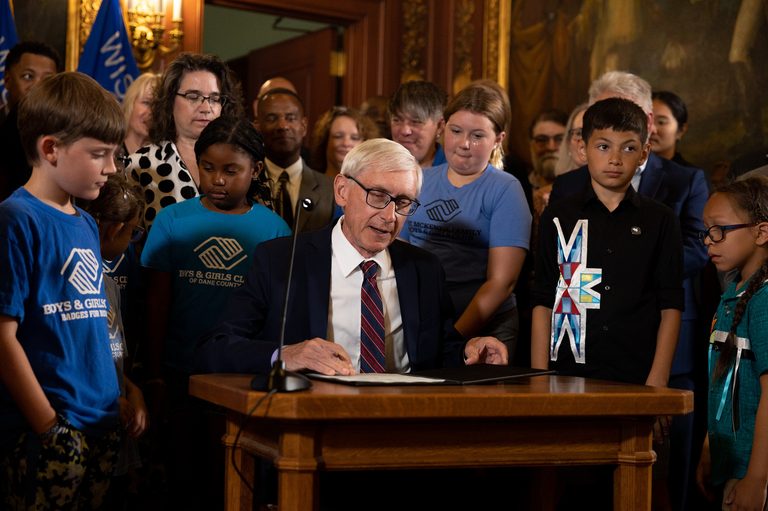
State Rep. Dave Murphy, R‑Hortonville, who authored the anti‑discrimination amendment, explained that constitutional amendments are reserved for “fundamental” issues that legislators cannot resolve through ordinary bills because the governor could veto them. Murphy said, “There are lots of things that I would do that Gov. Evers would have vetoed. I’m glad that I can take this to the people for a signing rather than to Gov. Evers because I think the people will support this.”
Sen. Chris Kapenga, R‑Delafield, who shepherded the tax‑veto amendment, framed the proposal as a restoration of the separation of powers. “It’s always about separation of powers,” Kapenga told Wisconsin Watch. “If we feel that the other two branches breached their authority, we go directly to the people.”
Details of each question
Tax‑veto amendment: The ballot language asks whether the governor may use the partial veto to create or increase any tax or fee. Republicans argue the amendment stops any governor—Republican or Democrat—from unilaterally raising taxes with a single pen stroke for the next 400 years. The measure does not ban local school districts from raising property taxes; it merely prevents the governor from expanding the state’s revenue‑limit ceiling without legislative approval.
Worship‑rights amendment: This question would prohibit the state or any political subdivision from ordering the closure of, or forbidding gatherings in, places of worship during a state of emergency, including a public‑health emergency. Supporters cite the COVID‑19 “Safer at Home” order that limited worship services to fewer than ten people, calling the restriction a violation of religious liberty.
Anti‑discrimination amendment: The third measure would bar the state and local governments, as well as public‑education institutions, from discriminating on the basis of race, gender, religion, age, veteran status, disability, or any other protected characteristic. Pro‑life Wisconsin and Wisconsin Family Action have endorsed the language, arguing it safeguards the constitutional guarantee of equal protection.
Support and opposition
Republican U.S. Rep. Tom Tiffany pledged to back all three amendments, saying, “No governor, Republican or Democrat, should have unchecked power to raise taxes or fees with the stroke of a pen… Our constitutional rights should never be conditional, and our government should never be allowed to discriminate.”
Democratic Governor Tony Evers and Milwaukee County Executive David Crowley have both urged voters to reject the measures. Evers called them “off‑base” and warned that voting “yes” would empower legislators to do “stupid things.” Crowley labeled the anti‑discrimination amendment a “bad‑faith argument from far‑right extremists” that distracts from the affordability crisis facing Wisconsin families.
Organized opposition includes the Wisconsin Education Association Council (the state’s largest teachers union) and the League of Women Voters, both of which have registered against the proposals.
Historical context
Since Gov. Evers took office in 2023, Republicans have placed twelve constitutional amendments on the ballot, with seven approved by voters. The most recent successful amendment, passed in April 2025, required photo identification for voting and was approved by nearly 63 % of voters.
Critics note that the tax‑veto amendment was prompted by a 2023‑25 budget decision that raised school‑revenue limits by $325 per year for the next 400 years. The Wisconsin Supreme Court’s liberal majority upheld the governor’s use of the partial veto in 2025, a decision Republicans say underscores the need for a constitutional fix.
What voters should consider
Wisconsin voters will weigh whether to empower the legislature and the people over the governor’s unilateral tax authority, protect the free exercise of religion during emergencies, and enshrine anti‑discrimination protections in the state constitution. The outcome will shape the balance of power in Madison and affect how state and local governments operate for decades to come.
Original reporting: Wisconsin Watch — read the source article.