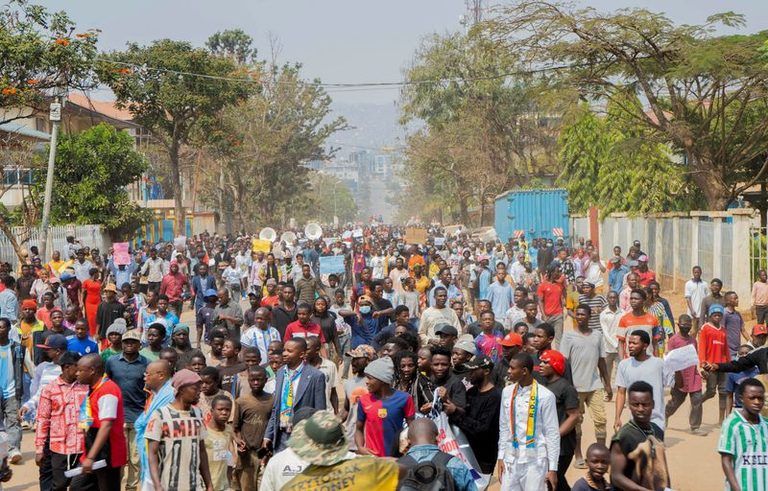
Kinshasa – On Tuesday, police forces in the Democratic Republic of Congo used tear gas and warning shots to disperse demonstrations in Kinshasa, Lubumbashi and Uvira. The protests were organized by the opposition C64 coalition, which includes former presidential hopefuls Martin Fayulu, Moise Katumbi and Delly Sesanga, and they object to a constitutional amendment that could permit President Felix Tshisekedi to seek a third five‑year term.
Protests and police response
According to two Reuters witnesses, several hundred demonstrators gathered in Kinshasa after the rally was officially authorized. The gathering began peacefully, but clashes soon erupted when pro‑government supporters joined the scene, hurling stones and brandishing machetes. Police intervened, deploying tear gas and firing warning shots to restore order.
In Lubumbashi and Uvira, local authorities had prohibited the protests, yet participants proceeded anyway. Both cities saw rapid police action that quickly broke up the gatherings, as reported by additional witnesses.
Government’s rationale
President Tshisekedi announced a national dialogue three weeks ago, inviting opposition parties, civil‑society groups and religious leaders to discuss the country’s political challenges. The administration frames the proposed constitutional changes as a means to strengthen governance and ensure continuity, arguing that a third term could provide stability amid ongoing security concerns in the eastern regions.
Supporters of the plan note that the current constitution limits presidents to two five‑year terms, but a June parliamentary bill now allows constitutional amendments to be decided by referendum. Members of the president’s coalition have backed the change, asserting that it reflects the will of the Congolese people.
Opposition and religious criticism
The powerful Catholic Church, alongside opposition parties, has condemned the amendment, warning that it undermines democratic norms. Critics fear that extending presidential tenure could concentrate power and erode checks and balances.
While the protests were officially prohibited in some cities, the government maintains that the dialogue remains open to all legitimate voices, except for rebel groups that control parts of eastern Congo. The administration emphasizes that the security forces acted only to prevent violence and protect public order.
International perspective
International observers have called for a transparent referendum process and urged the Congolese government to respect the right to peaceful assembly. Human‑rights groups note the use of tear gas and warning shots, urging authorities to prioritize dialogue over force.
As the nation heads toward a potential referendum, the tension between the president’s ambition for a third term and the opposition’s demand for constitutional fidelity remains a focal point of Congolese politics.
Original reporting: Appleton, WI News Feed (HLL/CB) — read the source article.