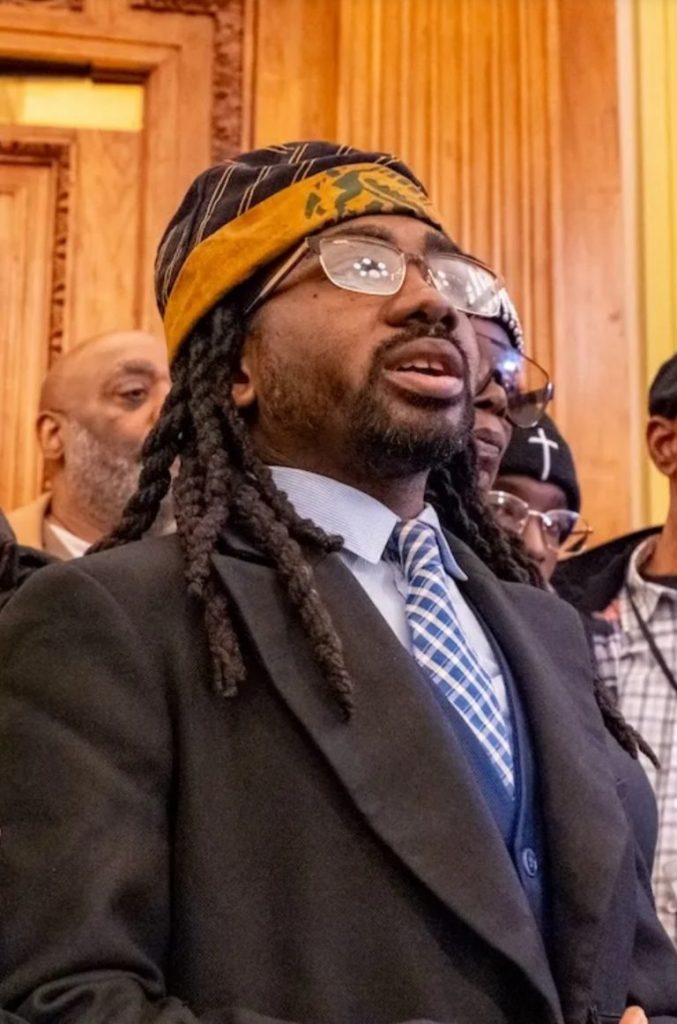
Washington, D.C. – The federal trial of Ward 8 Councilmember Trayon White (D) entered its final phase this week as the jury heard testimony from a range of witnesses, including an FBI informant, former city officials, and a former D.C. attorney general. White faces one count of bribery that could carry up to 15 years in prison if he is convicted.
Defense challenges the prosecution’s case
Attorney Bruce H. Searby asked U.S. District Judge Rudolph Contreras to dismiss the indictment, contending that the government has failed to prove beyond a reasonable doubt that White intended to exchange official action for cash. “The words that came out of Mr. White’s mouth were better than that,” Searby said, emphasizing that the evidence does not show a clear quid‑pro‑quo arrangement.
White’s legal team also cited the 2016 U.S. Supreme Court decision in U.S. v. McDonnell, which narrowed the statutory definition of bribery. They argued that the prosecution’s reliance on a “dizzying spin cycle” of Medicaid comments and contract discussions does not meet the higher proof standard set by that case.
Prosecution’s key witnesses
The government presented testimony from FBI special agent Matthew Gano, D.C. Council general counsel Nicole Streeter, Deputy Mayor for Public Safety and Justice Lindsey Appiah, and former D.C. attorney general Karl Racine, among others. Assistant U.S. Attorney Rebecca Ross highlighted that White allegedly accepted envelopes of cash from informant Allieu Badara Kamara Jr., a man who later admitted to $4 million in PPP fraud and pleaded guilty to bribery and bank fraud.
During cross‑examination, IRS special agent Sima Sleely described a forensic review of White’s bank account that showed a negative balance of over $1,000 and a deposit of more than $3,000 coinciding with a recorded meeting between White and Kamara.
Kamara’s testimony and alleged kickbacks
Kamara testified that he gave White $35,000, claiming it was intended to secure an extension of a contract for Life Deeds, a subcontractor of the Progressive Life Center nonprofit. He described a proposed “3 % kickback” arrangement for violence‑interruption contracts funded by the Office of Neighborhood Safety and Engagement (ONSE).
Kamara also disclosed that he had bribed former D.C. Child and Family Services program manager Markita Bryant and former ONSE deputy director Dana McDaniel to obtain at least seven contracts. He asserted that the cash was not reported as a campaign contribution, a point the prosecution used to argue the money was illicit.
Historical context and prior cases
The White case echoes earlier federal bribery prosecutions in the District, most notably the 2016 overturn of former Virginia Governor Robert F. McDonnell’s conviction, which narrowed the legal definition of public‑official bribery. Attorney Thomas T. Ruffin noted that the McDonnell decision emphasized the need for clear evidence of a direct exchange of money for official action.
White, first elected in 2017 after an unsuccessful bid to complete the term of his late mentor Marion S. Barry, has been re‑elected twice. He did not take the stand during the trial.
Potential outcomes
If convicted, White could face up to 15 years in federal prison. The defense remains confident that the jury will find the government’s case insufficient, especially given the Supreme Court’s narrowed bribery standard and the lack of a direct link between the cash and any official act.
The trial is expected to conclude in the coming days, after which the judge will issue instructions to the jury regarding the burden of proof and the definition of bribery under federal law.
Original reporting: The Washington Informer — read the source article.