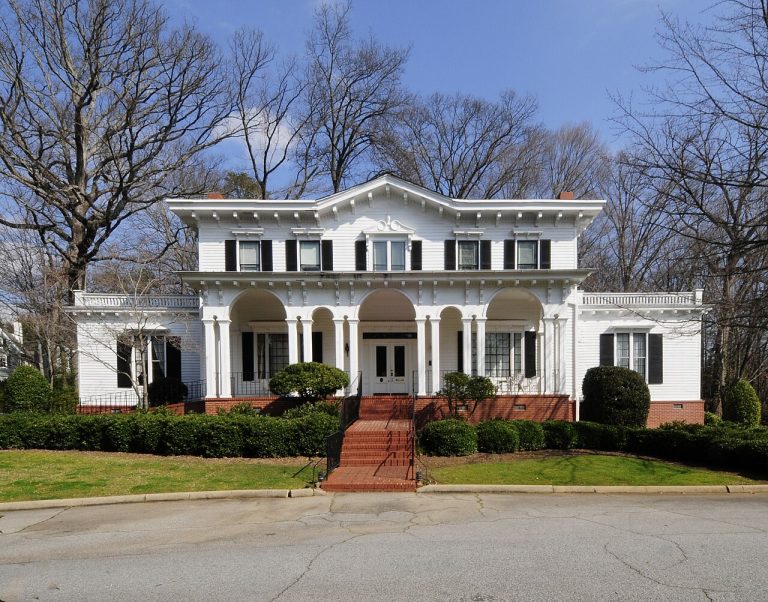
There is a particular kind of magic that happens when you step through the front door of a Victorian-era farmhouse and realize the family who built it never really left. That is exactly the feeling you get at the Smith-Renner House Museum in Wylie, Texas — a lovingly preserved late-nineteenth-century home that sits quietly on its original grounds and invites you to slow down long enough to actually feel the history rather than just read about it on a placard.
Wylie was platted in 1886 as a railroad town, and the families who arrived in those early years built lives that were sturdy, practical, and deeply rooted. The Smith-Renner House represents that era with remarkable authenticity. The structure itself is a vernacular farmhouse design — not a showpiece mansion, but a real home that real people lived in — and that ordinariness is precisely what makes it so compelling. Walking through the rooms, you get the sense that someone just stepped out to tend the garden and will be back directly.
The house is maintained by the Wylie Historical Society and sits within easy reach of the historic downtown area on Ballard Avenue, making it a natural companion stop if you are spending a morning exploring the older parts of the city. The grounds are modest but well kept, and the setting gives you a genuine feel for what this corner of Collin County looked like when cotton was king and the railroad was the lifeblood of every small town along its route.
Inside, the period furnishings and personal artifacts tell a layered story. You will find household items that speak to the rhythms of daily life in the 1880s and 1890s — the kind of objects that museums too often overlook in favor of grander display pieces. Here, a well-worn rocking chair or a kitchen implement carries as much weight as any formal portrait. Volunteers and docents from the historical society are genuinely passionate about the property and happy to share the context that turns objects into stories.
If you visit on a weekend when the society has an event or open-house scheduled, you may also find local genealogy resources on hand — Wylie has a remarkably well-documented local history, and the people who steward it love sharing what they know. It is the kind of afternoon that starts as a casual detour and ends with you three hours deep into someone else’s family tree, completely fascinated.
Admission is modest or free depending on the event, parking is easy, and the experience is the sort of unhurried, genuinely interesting outing that reminds you why small-town Texas history deserves as much attention as the big-city institutions. Give it a Saturday morning. You will leave knowing Wylie in a way that no highlight reel ever could have shown you.