Recent analysis by the Crowd Counting Consortium, a joint project of Harvard Kennedy School and the University of Connecticut, reveals stark differences in how three public universities handled pro‑Palestine demonstrations between October 2023 and May 2024. Ohio State University (OSU) in Columbus, Ohio, removed a student encampment within six hours, whereas the University of Michigan (U‑M) in Ann Arbor allowed its encampment to remain for roughly 30 days.
Arrest statistics and protest duration
During the reporting period, OSU recorded 40 arrests related to pro‑Palestinian actions, placing it among the top universities for arrests nationwide. By contrast, U‑M logged fewer arrests—ranking 27th nationally—despite its longer encampment period. Oberlin College in Ohio reported no arrests and did not rank for encampment days.
Student leadership and organizing
Heba Latif, then president of Students for Justice in Palestine at OSU, became a prominent figure in the 2024 campus movement, coordinating teach‑ins and fielding extensive communications. At U‑M, Salma Hamamy led Students Allied for Freedom and Equality (SAFE), a coalition of more than 80 student groups advocating for Palestinian liberation. Both leaders described extensive efforts to engage university officials before protests escalated.
Attempts to seek dialogue
SAFE sent multiple emails to U‑M administrators, increasing the number of signatories from 13 to 80, yet received no response. Hamamy said the group also tried to address the Board of Regents at public meetings, only to be met with procedural changes that limited student participation. Similar outreach attempts by OSU students were not documented in the source.
Police response and escalation
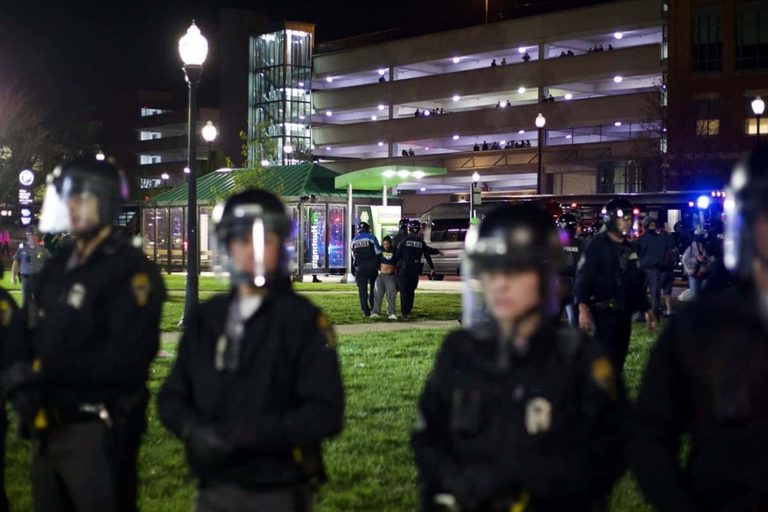
In November 2023, a sit‑in at U‑M’s Ruthven Administration Building prompted a large police presence—estimated at 100 officers from 13 precincts—according to Hamamy. Officers blocked water deliveries and eventually cleared the building, resulting in 40 arrests. Hamamy attributed the heavy response to what she described as Islamophobia and anti‑Palestinian bias, noting that Zionist‑aligned student groups did not face comparable restrictions.
Impact of administrative choices
Hamamy argued that earlier, constructive engagement by university officials might have prevented the escalation to a large‑scale encampment. She emphasized the moral responsibility of administrators to address student concerns promptly. OSU’s rapid dismantling of the encampment, coupled with a higher arrest count, suggests a more forceful approach to maintaining campus order.
Oberlin College’s approach
At Oberlin College, a “die‑in” protest in the Cox Administration Building drew nearly 100 participants demanding divestment from Israel. Unlike the Michigan sit‑in, Oberlin’s administration agreed to meet with organizers, and no arrests were reported.
Broader implications
The differing responses underscore how public universities balance free speech rights with campus safety and order. While all three institutions are state‑funded, their policies on protest management and engagement with student groups vary considerably, raising questions about consistency in upholding constitutional free‑speech protections on college campuses.
Original reporting: Matter News (Columbus) — read the source article.