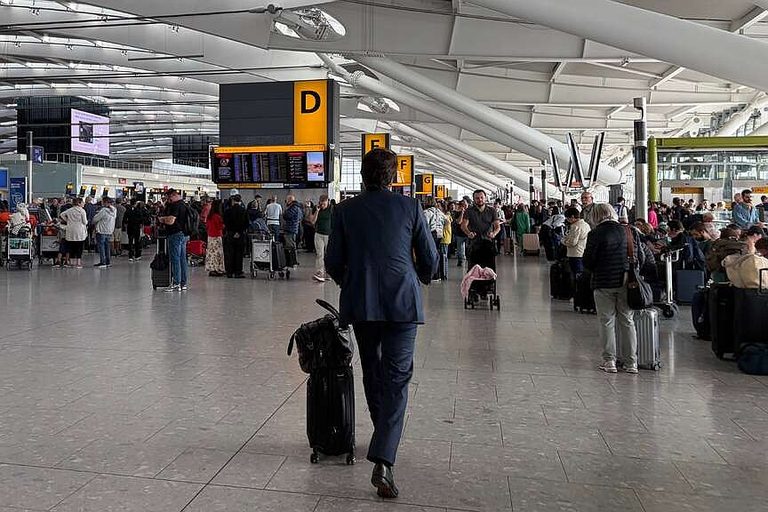
Travelers across the United Kingdom were hit with a massive disruption on Tuesday after a problem in the national air traffic control system forced the cancellation of over 1,000 flights. The issue, which originated in the flight‑processing software used by National Air Traffic Services (NATS), was resolved late in the evening, but the ripple effect left passengers stranded for hours at major airports.
Airports most affected
Heathrow, Gatwick, Stansted, London City, Manchester, Birmingham, and several Scottish airports reported extensive delays and cancellations. Heathrow resumed departures but suspended arrivals for the remainder of the night, warning travelers of further setbacks. At Gatwick, passengers like Josie Donoghue spent three hours on a grounded Ryanair flight before it was finally canceled, describing the experience as “like trying to get out of Alcatraz.”
Airlines respond
British Airways confirmed that more than 100 of its flights were either canceled or diverted. The carrier’s spokesperson said the incident was “entirely out of our control” and expressed frustration for both customers and staff. Passengers on a British Airways flight bound for Baltimore endured a four‑hour wait on the tarmac, during which flight attendants served pasta and chicken curry while travelers watched movies or walked the aisles.
Ryanair reported that over 65,000 of its passengers were affected and that the airline canceled more than 50 scheduled flights. EasyJet noted that some of its services were “unable to operate” and that the system failure caused delays across Europe.
Passenger experience
Social media was filled with complaints about long waits, lack of communication, and chaotic baggage claim areas where travelers were told to file claims for lost luggage. Many passengers expressed disappointment with the limited information provided by airlines during the outage.
What caused the outage?
NATS said the disruption stemmed from a fault in its flight‑processing system, which coordinates the movement of aircraft across the country’s airspace. The agency worked through the night to restore normal operations, but the sheer volume of delayed flights created a backlog that will take days to fully resolve.
Looking ahead
Airlines have urged passengers to check flight status directly with their carriers before heading to the airport. The incident highlights the vulnerability of complex air‑traffic infrastructure and underscores the importance of robust backup systems to prevent future widescale disruptions.
Travelers planning to fly in the coming days are advised to remain flexible, monitor airline communications, and consider alternative routes where possible.
Original reporting: Texarkana Gazette — read the source article.