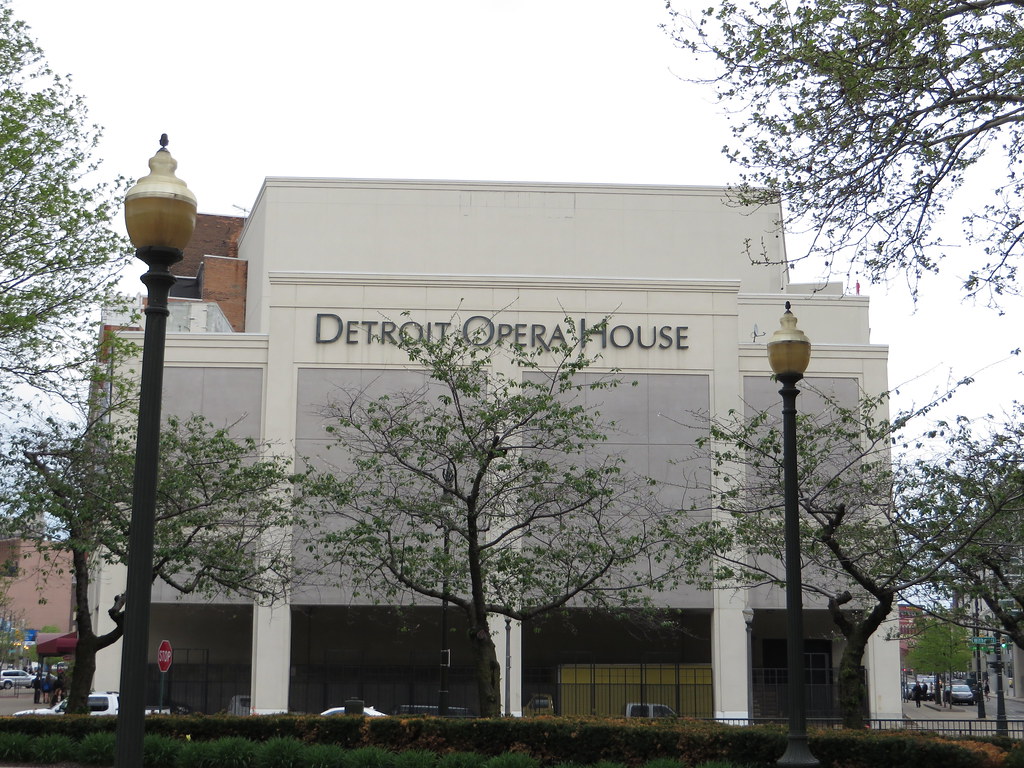
There are buildings you walk past and buildings that stop you cold. The Detroit Opera House, rising magnificently at 1526 Broadway Street in the heart of Downtown, belongs firmly in the second category. But here is the thing most visitors never realize until they are standing inside: this place is not just a performance hall. It is a love letter written in plaster, gilt, and velvet to a city that has always believed in doing things beautifully.
Originally opened in 1922 as the Capitol Theatre — a movie palace designed by the legendary architectural firm C. Howard Crane — the building sat dark and deteriorating for years before a massive, painstaking restoration effort in the early 1990s brought it roaring back to life as the home of Michigan Opera Theatre. The restoration cost roughly $15 million and took years of meticulous work, and every dollar shows. The moment you pass through the lobby, you are surrounded by soaring ceilings, ornate chandeliers, and the kind of architectural detail that simply does not exist in modern construction. The grand staircase alone is worth the price of a ticket.
The main auditorium seats just over 2,700, which means there is no bad seat in the house. The sightlines are exceptional, the acoustics are warm and enveloping, and the scale of the room creates a sense of occasion without ever feeling cold or intimidating. Whether you are settling in for a full operatic production, a ballet performance, or one of the venue’s touring Broadway engagements, the room itself elevates the experience before a single note is played.
Michigan Opera Theatre presents a full season each year, typically running from fall through spring, with productions ranging from beloved classics like La Traviata and Carmen to newer works and family-friendly programming. The Broadway in Detroit series brings major touring productions through the hall as well, so even if opera is not your particular passion, chances are excellent that something on the calendar will speak to you. Check the schedule at michiganopera.org and plan ahead — popular shows sell out quickly, and this is one of those experiences best enjoyed with a little anticipation built in.
The surrounding neighborhood rewards a longer visit. The Broadway Street corridor connects easily to Greektown, Campus Martius Park, and Cadillac Square, all within a comfortable walk. Pre-show dinner options abound nearby, and the energy of Downtown Detroit on a performance night — well-dressed couples arriving by rideshare, a buzz of conversation spilling out onto the sidewalk — feels like the city showing its best self.
Detroit gets described in terms of grit and resilience so often that its genuine elegance sometimes goes unnoticed by outsiders. The Detroit Opera House is a remedy for that oversight. It is proof that this city has always known how to dream big, build beautifully, and come back stronger than anyone expected. Buy the ticket. Dress up a little. Let the curtain rise.