This piece looks at growing strain inside the U.S.-brokered network meant to check Iran, focusing on a disputed Israeli claim about a secret visit by Benjamin Netanyahu to the United Arab Emirates and the UAE’s sharp denial. It names Sheikh Mohammed bin Zayed Al Nahyan and analyst Natan Sachs, notes President Donald Trump’s call with Netanyahu, and traces how mistrust after a public leak could complicate the Abraham Accords and regional security against Tehran.
Tensions flared when Benjamin Netanyahu’s office announced what it called a “historic breakthrough” meeting with Sheikh Mohammed bin Zayed Al Nahyan in Al Ain, and the UAE promptly pushed back. The UAE Ministry of Foreign Affairs shot down the notion of secrecy, insisting their normalization with Israel rests on open, public agreements. “Its relations with Israel are public and were established within the framework of the well-known and publicly declared Abraham Accords. These relations are not based on secrecy or clandestine arrangements.”
The ministry doubled down with a clear warning to anyone floating rumors. “Therefore, any claims regarding undisclosed visits or arrangements are baseless unless issued by the relevant official authorities in the UAE.” That kind of official language signals more than a simple denial; it marks a diplomatic rebuke that can be hard to smooth over. For a coalition built on careful, public steps, leaks and surprise boasts create real friction.
“The stakes are high,” Middle East Institute analyst Natan Sachs warned, and his read is worth taking seriously. “I imagine the Israelis are working overtime to mend relations with the UAE, but it is too early to tell,” he said. From the Republican perspective, stability in these partnerships matters because they are a firewall against Iranian aggression and a win for U.S. strategy in the region.
Sachs called the public claim a misstep. He said it “seems like a diplomatic blunder because it embarrasses the UAE.” That embarrassment matters in Gulf politics, where trust and private diplomacy are currency. “This was an odd move to make since the UAE has been a close partner of Israel, even during this war,” Sachs said.
The leak raises questions about motive and timing. “Either Netanyahu didn’t think, or he was thinking about something else — domestic politics. It would not be the first time he did that.” Such impulses can undercut long-term strategy, and when partners feel blindsided, the ripple effects are immediate. “To the degree that the Emirati anger is genuine, it would have meant working to preserve trust with their Gulf Arab ally,” Sachs added.
Trust can fray fast when security is at stake. “I would also not rule out Emirati anger at the leak itself, which could be seen as a break of trust — something very important to the Emirati leadership.” That break of trust follows a period when the Abraham Accords had begun to yield real cooperation on military and intelligence fronts against Tehran. Repairing that requires both candor and restraint.
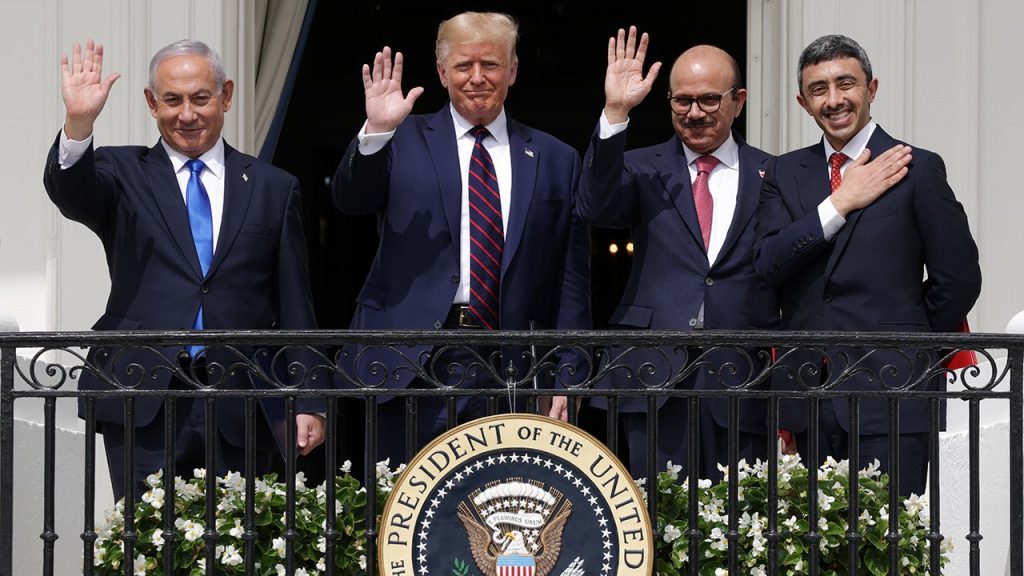
The Abraham Accords, brokered by the United States in 2020, reset the regional map by normalizing ties between Israel and several Arab states and expanded security cooperation. That cooperation was stress-tested when Iran struck UAE military and energy infrastructure during Operation Epic Fury, and Emirati officials reported intercepting incoming threats. In the fog of those attacks, clear, coordinated responses from partners were vital.
Sachs underscored the vulnerability the UAE faced in those strikes. “The UAE received much of the fire from Iran. It is the most vulnerable to Iranian short-range missiles, which are more plentiful and cheaper than the medium-range missiles fired at Israel,” Sachs said. He noted, “While short-range missiles can be intercepted, Iran has many more of them. The UAE took the most hits, yet it stood out by sticking most clearly to its strategy of open partnership with Israel.”
Even so, the public claim that Netanyahu himself visited could have been the last straw in a fragile moment. “But the public disclosure that Netanyahu himself visited may have just been seen as a step too far,” Sachs added. From a Republican viewpoint, the lesson is plain: alliances are strengthened by steady, disciplined diplomacy and by leadership that puts strategic cohesion ahead of headline-grabbing moves.
President Donald Trump spoke with Netanyahu as tensions with Iran mounted, and the Israeli leader was described as “prepared for every scenario.” Carefully managed alliances matter now more than ever, as Washington and its partners weigh responses to Tehran’s provocations. If the U.S. wants the Abraham Accords to hold as a regional counterbalance, American policymakers and allied leaders must insist on transparency, mutual respect, and operational security.