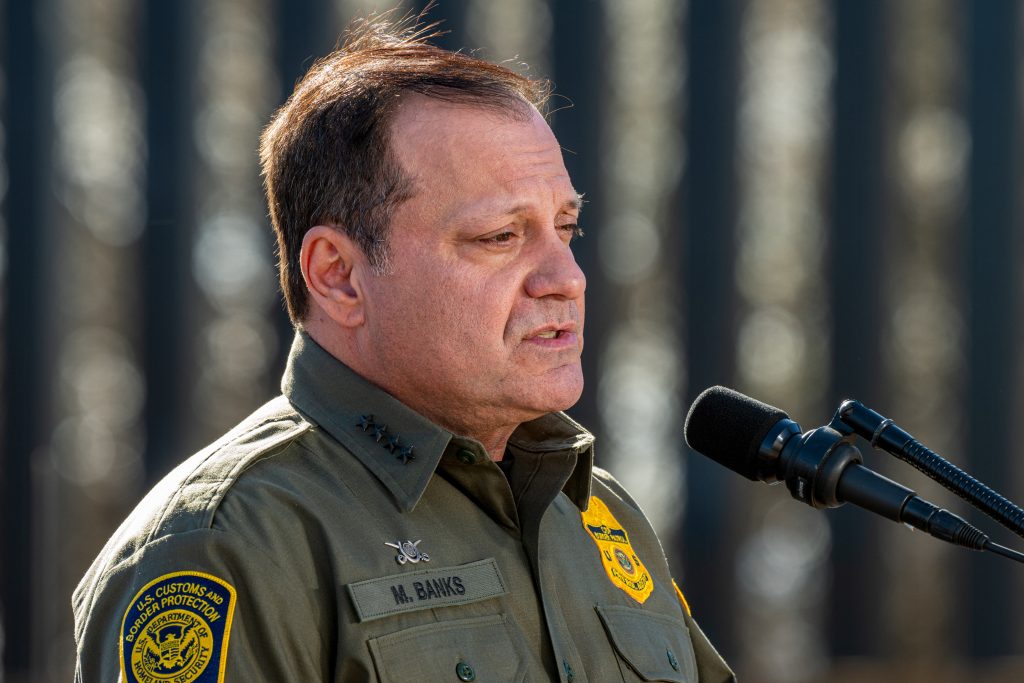
Michael Banks, the head of U.S. Border Patrol, announced his resignation in a Fox News interview, a move confirmed by the Department of Homeland Security that cuts across Washington and state halls from Texas to Minnesota and touches on leaders like Rodney Scott, Markwayne Mullin, Gov. Greg Abbott, and others involved in recent immigration enforcement efforts.
Banks said bluntly, “It’s just time,” framing his exit as the end of a long run. He added, “I feel like I got the ship back on course from the least secure disastrous chaotic border to the most secure border this country has ever seen,” a line that reflects how he and many conservatives view the agency’s recent focus. His departure landed midstream in operations that have put CBP and ICE squarely in the spotlight. The move was announced on Fox News and later affirmed by DHS officials in Washington.
Rodney Scott, the U.S. Customs and Border Protection commissioner, issued a formal note of thanks for Banks’ service, saying the job was handled during “one of the most challenging periods for border security.” That public nod matters because it signals stability within the top ranks even as personnel shuffle. For Republicans who back tough enforcement, Scott’s comment helped cast the transition as orderly rather than chaotic. The White House remained quiet on immediate comment, leaving the agency and its supporters to shape the narrative for now.
Banks led an agency that has been central to high-profile enforcement moves in Democratic-run cities, operations that produced a spike in arrests and sparked fierce political debate. Those actions were controversial and, in at least one tragic incident, deadly: federal immigration operations were tied to the fatal shooting of two U.S. citizens in Minneapolis this year. Supporters insist aggressive enforcement is necessary to stop smuggling and illegal crossings; critics say the tactics risk civil liberties and public safety. That tension has defined the job since Banks returned to the Border Patrol last year.
The timing of his resignation coincides with broader management changes at DHS after Markwayne Mullin became secretary two months ago. Banks’ exit also overlaps with a switch at ICE, where acting director Todd Lyons is scheduled to leave and David Venturella is slated to take over. Republicans watching the department see these moves as a chance to reset priorities and put experienced hands in place to keep policies that prioritize border control. For many, the reshuffle is less about drama and more about practical continuity.
Banks’ career path is notable: after decades in the agency he rose to lead it only late in that arc, and he previously served as border czar for Gov. Greg Abbott during a period of intense state-level enforcement in Texas. His role in Texas’ multibillion-dollar push against illegal crossings put him in the middle of federal-state tensions and turf fights with the Biden administration. That experience made him a figure Republicans trusted to push hard on enforcement while navigating bureaucratic friction. He kept a lower public profile than others, but his policy choices had visible impact.
Customs and Border Protection itself was formed in 2003 and handles customs, immigration, and agriculture inspections, a mix that makes it central to how the country manages who and what crosses our borders. Under recent leadership it has been increasingly tapped for domestic immigration operations in addition to traditional border duties. That dual role has raised questions about mission creep and the proper use of federal law enforcement inside American cities. Yet for many conservatives the priority remains clear: secure the border first, sort out the rest later.
Banks did not make a public appearance at the Border Security Expo in Phoenix this month, an annual gathering where government officials and contractors trade updates and hardware talk. Rodney Scott has been the more visible face of the agency, and that kind of public role matters when the administration wants to show results. Banks, by contrast, favored the operational side, focusing on arrests and enforcement metrics rather than media presence. His farewell line about family—“it’s time to enjoy the family and life”—underscored a personal side to what otherwise reads like a policy-driven career.
Who will replace Banks is still an open question, and the vacancy invites debate among lawmakers and agency insiders about the direction of border operations. Republicans pushing for robust enforcement will want a successor who maintains the recent posture and keeps pressure on smuggling networks. At the same time, any new leader will face scrutiny over tactics used in urban operations and the fallout from tragic incidents. The choice will matter for how the administration balances visibility, enforcement, and public trust in the months ahead.