Verge Ausberry, LSU athletic director in Baton Rouge, has publicly defended new coach Lane Kiffin while blasting the program’s recent leadership, and the fallout touches on recruiting, boosters and NIL money across the SEC. Ausberry told USA Today’s Matt Hayes that LSU needed a reset after parting ways with Brian Kelly, and he invoked a return to a “Saban model” of hands-on coaching and donor relations. The exchange has stirred reactions from Ole Miss fans and raised questions about whether Kiffin can match LSU’s historical recruiting heft. This piece walks through Ausberry’s comments, the recruiting context under Ed Orgeron and Brian Kelly, and why boosters matter so much in Baton Rouge.
Ausberry made it clear he believes the program required a sharp shift in direction after Brian Kelly’s exit, and his backing of Lane Kiffin has been emphatic. He framed the change as organizational, not just a roster tweak, saying the football program needs leadership that runs the whole operation and connects with supporters. That jab at Kelly, while never naming him directly in every line, was unmistakable to anyone following the coaching shuffle in Baton Rouge.
“It’s going back to the Saban model,” Ausberry told USA Today’s Matt Hayes. He explained that running the whole program means more than game planning — it means fundraising, engaging alumni, working boosters and managing NIL. Ausberry laid out a vision where the head coach is the public face who brings donors into the fold and energizes the fan base.
He painted Lane Kiffin as exactly the sort of figure who will pick up the phone and do the heavy lifting with boosters: “He’ll go out there and have that conversation with the donors and the people who support the program and (say), ‘We need your help,’ and give them his cell number.” That direct, personal approach to donor relations is the centerpiece of Ausberry’s argument for why Kiffin fits LSU’s needs. It’s a contrast he clearly meant to draw against the prior era.
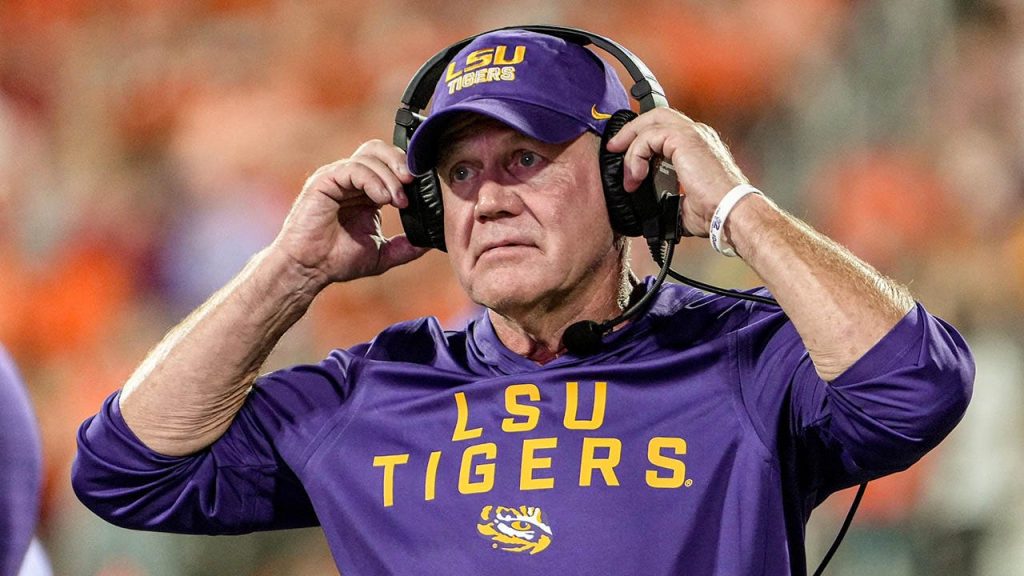
Ausberry didn’t shy away from a stark characterization of what he saw as the previous coach’s distance from supporters: “He’s not one who’ll say, ‘OK, I don’t want people to contact me. I don’t want people to touch me. I don’t want people to be around me.’ That’s who we had. That’s why we got what we got. There was no feel, there was no connection between the LSU football program, the coach, and the fans.” Those lines make the case that relationships — not just Xs and Os — matter at a blue-blood program like LSU.
That critique lands harder when you stack it against recruiting metrics. LSU remains an easy destination for talent, with deep boosters and resources, yet the recruiting classes under Brian Kelly lagged behind Ed Orgeron’s numbers. According to the 247Sports recruiting composite rankings, Orgeron’s average class ranking at LSU was 6.8, while Kelly’s average dipped to 8.75, a slide that raised eyebrows inside and outside the program.
If the coach isn’t building genuine connections with donors and fans, Ausberry’s point goes, then the financial and recruitment muscle that defines top SEC programs can atrophy. Donors fuel NIL deals, facility upgrades and the glossy recruiting pitches that win top-tier prospects. In that ecosystem, a head coach who’s perceived as aloof can create a drag on results even if the on-field scheme is solid.
How Lane Kiffin fits into that equation is still unfolding. The honeymoon phase is active in southern Louisiana, and expectations are sky-high, but Kiffin will have to produce quickly. He has a track record with NIL at Ole Miss, where he helped grow the platform that attracted talent, and early valuations of LSU’s roster sit around $40 million — numbers that feed the optimism Ausberry is selling.
Not everyone is convinced, though, and social media shows it. Rebels fans, feeling the sting of Kiffin’s move, have reacted loudly online with anger and ridicule, which could be sour grapes or a real forecast of trouble ahead. That pushback is part cultural, part territorial — coaches crossing rivalry lines stirs emotion — and it adds noise to what will ultimately be judged on recruiting classes and wins.
For now, Verge Ausberry has circled the wagons and put Kiffin squarely in his corner, betting that a coach who courts donors and fans will reverse recent trends. That’s a strategy rooted in how the modern SEC operates: relationships fuel recruiting and recruiting fuels championships. If Ausberry’s assessment is right, he’s already started the work of rebuilding those bridges in Baton Rouge, and he’ll be judged on whether it translates to talent and results on the field.