Approximately 1,200 tornadoes occur in the United States each year, and every one of them gets its own rating on the Enhanced Fujita Scale, also known as the EF Scale. This scale organizes tornadoes into strength categories ranging from EF0 to EF5, depending on the maximum wind speed, which meteorologists estimate based on the type of damage left behind.
How Tornadoes Are Rated
The Enhanced Fujita Scale is necessary because tornadoes are small and short-lived compared to other types of weather, making them difficult to accurately measure with typical weather radar and observation networks. Without the EF Scale, specialized equipment like mobile weather radars would need to be set up at the right place and time to catch every tornado, which is not possible.
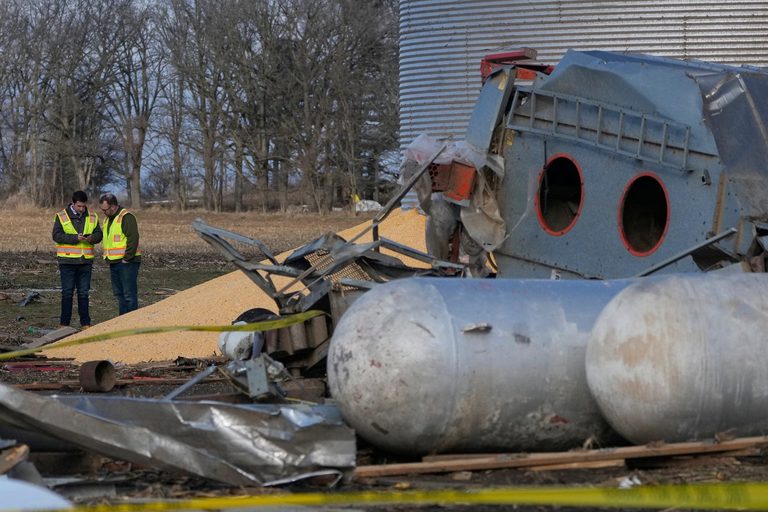
Damage survey teams from the National Weather Service deploy to impacted areas and document what they find. They determine if a tornado occurred, its exact track, how strong it became, and several other factors. These surveys are vital and are the basis for tracking tornado behavior and trends over time in the US.
The survey teams work with local emergency managers, police, and fire crews to get a sense of where damage occurred. They typically start the survey in the area with the worst damage before investigating the rest of the path. Time is critical in these surveys, as teams need to document everything before communities start to clean up and try to resume normal life.
Once teams locate the worst damage, they start to select damage indicators outlined in the EF Scale. A damage indicator is the type of building or object the tornado hit, such as a three-story house or power pole. There are 28 distinct damage indicators to choose from, and crews analyze the damage to each indicator in a standardized way based on their construction or the materials the object was made from.
The types of damage indicators chosen for the EF Scale better account for modern structural engineering and allow less room for subjectivity than the original Fujita Scale it replaced in 2007. Vehicle damage is not factored in.
Determining Tornado Strength
For example, if a survey team finds that a small barn, a nearby single-family home, and several hardwood trees have tornado damage, these are indicators that help determine the tornado’s strength. The team will then identify the degree of damage for each indicator, which is tied to three wind speed estimates: an expected speed, a lower estimate, and a higher estimate.
Determining the correct degree of damage is the only way for crews to pinpoint a tornado’s winds and therefore its strength. One damage indicator isn’t enough to tell the full story, so crews repeat the process until an average maximum wind estimate for the tornado becomes apparent.
Once the team agrees on a maximum wind estimate, they see where it falls on the EF Scale. The tornado is then rated accordingly, with the rating ranging from EF0 to EF5.
Original reporting: KRDO (Colorado Springs metro) — read the source article.