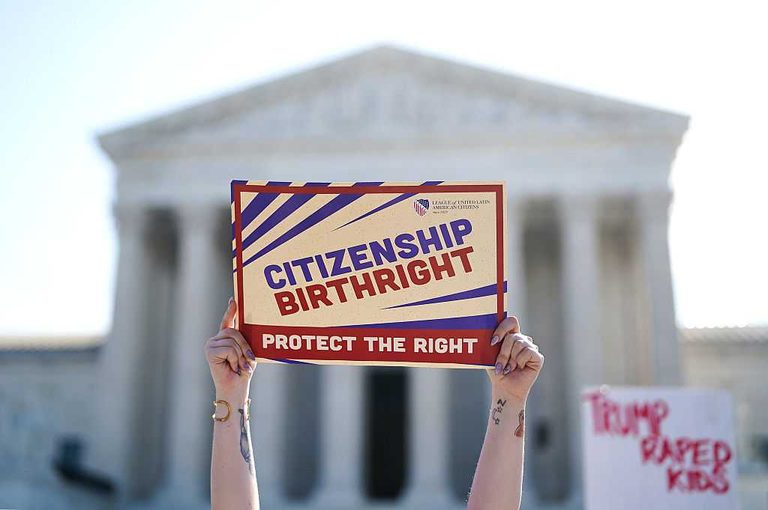
The Supreme Court on Tuesday struck down President Donald Trump’s executive order attempting to limit birthright citizenship. The court ruled 5-4 in favor of upholding the long-held Fourteenth Amendment right of any child born in the United States to claim citizenship.
Majority Opinion
Chief Justice John Roberts wrote the majority opinion in Trump v. Barbara, joined by Associate Justices Sonia Sotomayor, Elena Kagan, Amy Coney Barrett, and Ketanji Brown Jackson, who also wrote a separate concurring opinion.
In April, the Supreme Court heard oral arguments from Solicitor General D. John Sauer and Cecilia Wang, the national legal director for the American Civil Liberties Union, on whether the Constitution guarantees citizenship to children born to parents unlawfully or temporarily present in the United States.
Dissenting Opinions
Justice Clarence Thomas, one of the court’s conservatives, penned a 91-page dissenting opinion. Justices Samuel Alito and Neil Gorsuch wrote separate dissents.
Justice Brett Kavanaugh, while counted among the dissenting votes, agreed with the result the court reached that the executive order was invalid, but not with its reasoning. Kavanaugh said Trump’s order “does not violate the Fourteenth Amendment,” but the order does contravene a federal law that says children born in the United States are subject to its jurisdiction.
Justice Kavanaugh suggested that Congress could amend the federal statute, 8 U.S.C. § 1401(a), “or otherwise enact new legislation establishing exceptions to birthright citizenship for children born to foreign citizens unlawfully or temporarily in the country.”
Original reporting: 40/29 / KHBS (NW Arkansas) — read the source article.