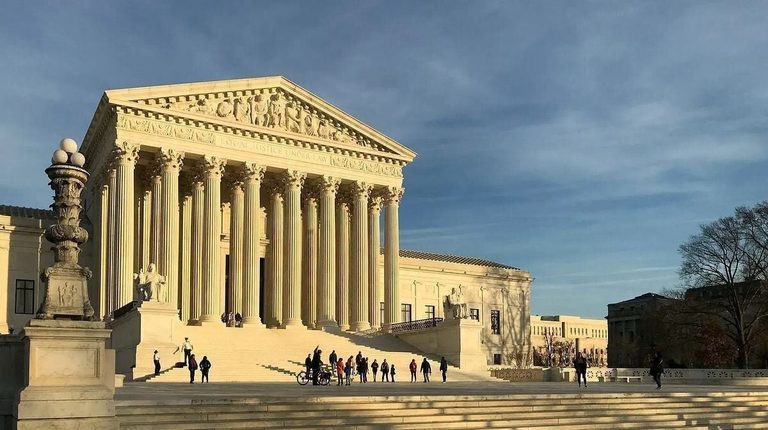
At a Supreme Court Preview hosted by George Washington University Law School on Tuesday, law professors warned that the high court’s pending review of two consolidated cases—Viramontes v. Cook County (Illinois) and Grant v. Higgins (Connecticut)—could have sweeping consequences for the nation’s gun‑rights landscape.
Case background
The lawsuits challenge state bans on semi‑automatic rifles, including the popular AR‑15 platform, enacted after mass shootings in Illinois and Connecticut. Both statutes prohibit the sale, delivery, manufacture, purchase and import of these weapons.
Legal framework
The challenges invoke the Supreme Court’s 2022 Bruen decision, which requires legislators to justify any restriction on the Second Amendment by pointing to the nation’s historical tradition of firearm regulation. Critics of the bans argue that the historical record supports broader gun ownership, while supporters contend that modern public‑safety concerns justify the restrictions.
Expert analysis
Robert Cottrol, a professor of law at George Washington University, told the audience that the Court is likely to look to the Militia Act of 1792, which required white men aged 18 to 45 to enroll in a local militia and provide their own military‑grade weapons. “Nothing in the history or tradition of firearms litigation or legislation says that military features should necessarily be taken,” Cottrol said, adding that the framers expected citizens to retain access to such arms.
Cottrol predicted that the justices could overturn the Illinois and Connecticut bans, but he cautioned that the Court’s reasoning will set the tone for future Second Amendment litigation. He emphasized that the National Firearms Act of 1934 still mandates registration of fully‑automatic weapons, and any ruling must preserve that distinction.
Potential limits
While the cases focus on semi‑automatic rifles, Cottrol noted that they do not address large‑capacity magazines. He warned that future courts may have to decide where to draw the line on magazine capacity limits, a question that could shape the next wave of gun‑policy battles.
Related docket items
On the same day the Court will hear RNC v. Mi Familia Vota, a challenge to Arizona’s proof‑of‑citizenship voting requirement, and Kian v. Florida, which asks whether states must use 12‑person juries in non‑capital cases. Legal scholars expect the Court to uphold the 12‑person jury rule, noting the logistical and evidentiary challenges of retroactively retrying older cases.
What’s at stake
If the high court strikes down the semi‑automatic rifle bans, states may need to revisit their firearm regulations, potentially expanding the range of weapons available to private citizens. Conversely, a decision upholding the bans would reinforce state authority to limit certain firearms in the interest of public safety.
Stakeholders on both sides of the debate will be watching closely, as the outcome could influence legislation, law‑enforcement practices, and the broader national conversation about the balance between constitutional rights and community security.
Original reporting: KTBS 3 (Shreveport) — read the source article.