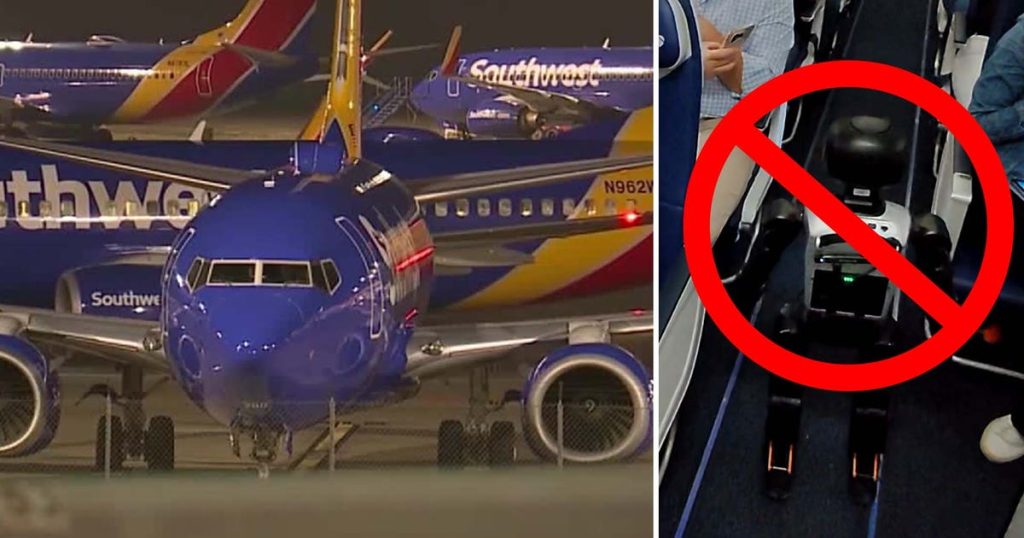
Southwest Airlines has moved to ban human-like robots on its flights after an incident involving a passenger who purchased a seat for a robot companion on a flight from Dallas Love Field to Las Vegas. This story touches on the clash between evolving personal technology and existing airline rules, raising questions about safety, space, and where robots fit into public life. Passengers, crew members, and policymakers are watching how carriers manage increasingly lifelike devices in cabins. The decision by Southwest sets a tone for how U.S. carriers might handle similar situations going forward.
The image of a traveler booking a seat for a robot triggered a quick policy response from Southwest Airlines, which decided to ban human-like robots from its planes. Airlines are built on rules designed for people, bags, and safety equipment, not for companions that mimic human appearance or behavior. That mismatch pushed Southwest to act fast, framing the move as necessary to keep cabins orderly and predictable for crews and other passengers.
For passengers who own advanced consumer robots, the ban feels like a sudden limit on how they can travel with personal technology. Owners argue these devices offer companionship, assistance, and stability, especially for people with specific needs. But fellow travelers raised concerns about space, unexpected interactions, and how a robot might behave during boarding, turbulence, or an emergency situation.
Crew members have to manage the cabin, and an unexpected human-like device adds complexity to that job. Flight attendants are trained to evaluate threats to safety and to secure the cabin quickly; a robot that looks or moves like a person could complicate split-second judgments. Southwest framed the ban as a preventive step to reduce ambiguity and ensure that crew members can focus on standard safety procedures without additional distractions.
Regulatory frameworks have not yet caught up with personal robotics in many everyday settings. The Federal Aviation Administration oversees aircraft and passenger safety, but it does not have detailed rules about humanoid robots riding in passenger seats. Until regulators provide clearer guidance, airlines will continue to rely on their own interpretations of safety and customer service priorities when deciding what to allow on board.
The public reaction has been mixed, with some people amused by the idea of a robot in the aisle and others uneasy about the implications. Social media posts about the Dallas Love Field to Las Vegas flight sparked debate over whether robots should get seats, share armrests, or be counted as carry-on items. That online buzz contributed to the wider conversation about where technology belongs in shared spaces and how much accommodation society should make for devices that look human.
Practically speaking, there are unresolved questions about liability, storage, and how a robot should be secured during takeoff and landing. If a device is too large to stow safely, it could become a hazard during turbulence or an emergency evacuation. Airlines have long had rules about stowing items under seats and in overhead bins to prevent injury, and human-like robots challenge those established practices.
As more people experiment with robots designed to resemble humans, expect more airlines to clarify or tighten policies. Some carriers may offer explicit allowances for service animals or assistive devices while drawing firm lines around lifelike robots that do not perform medical or mobility functions. For travelers, this means checking carrier rules before boarding and being ready to adapt as the travel industry figures out practical, safety-first answers.