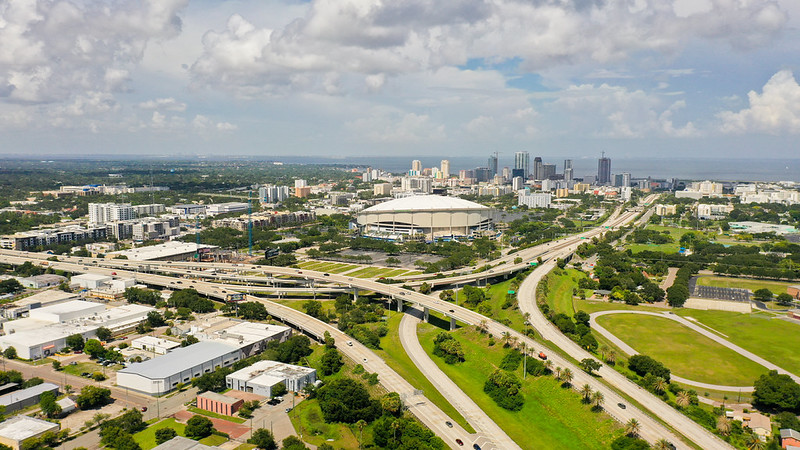
The Sierra Club has put forward a comprehensive plan for the redevelopment of the Historic Gas Plant District in St. Petersburg, Florida. This proposal aims to transform the area into a model of sustainability and resilience, while honoring the community’s historical legacy.
Focus on Green Spaces and Ecological Restoration
The Sierra Club emphasizes the importance of creating publicly accessible green spaces, with a focus on the restoration of Booker Creek. The creek is seen as a vital public asset that can enhance water quality, reduce flooding, and provide habitat for local wildlife. The plan suggests a minimum 250-foot vegetated buffer on both banks of the creek, using native plants to stabilize the area and manage stormwater.
Community-Centric Development
The redevelopment plan calls for a mix of walkable, transit-connected neighborhoods and mixed-income communities. The Sierra Club advocates for a central public park of up to 30 acres, serving as the ecological and civic heart of the district. This park would be part of a broader network of green infrastructure, including bioswales, rain gardens, and permeable pavements, to manage stormwater effectively.
Measurable Sustainability Goals
To ensure the redevelopment meets its sustainability goals, the Sierra Club recommends setting measurable targets. These include a minimum of 14 acres of contiguous open space, specific tree canopy targets, and the use of Florida native landscaping. The plan also suggests implementing educational signage to inform residents and visitors about the ecological and historical significance of the area.
By integrating these principles, the Sierra Club aims to create a redevelopment that not only meets the needs of current and future residents but also serves as a model for sustainable urban development across Florida and beyond.
Original reporting: St. Pete Catalyst — read the source article.