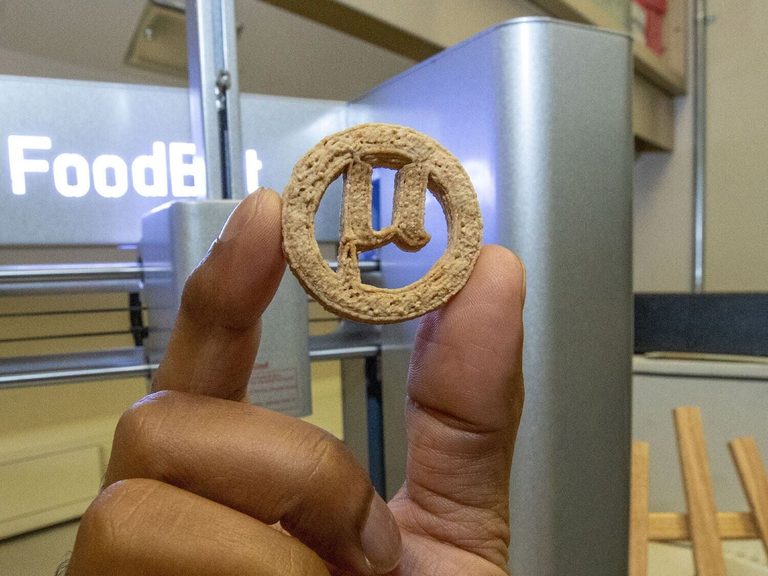
In a development that could impact both global nutrition and waste management, a team of scientists at Southern Illinois University (SIU) has engineered yeasts to transform plastic bottles and agricultural residues into a protein‑rich snack. The project, conducted under a NASA‑sponsored program aimed at developing food for deep‑space exploration, resulted in a 3‑D‑printed cookie dubbed “µBites.”
How the technology works
The researchers focused on polyethylene terephthalate (PET), the polymer most commonly used for water and soda bottles. PET contains abundant carbon atoms that can be reassembled into protein‑like molecules. Rather than relying on harsh chemical processes, the team used a method called oxidative hydrothermal dissolution, developed by SIU geology professor Ken Anderson, to break down PET and plant biomass into small, microbe‑accessible fragments.
These fragments were then fed to specially programmed yeasts, including common baker’s yeast. By inserting genetic pathways, the yeasts were instructed to convert the carbon fragments into proteins, fats, acids, vitamins and flavor compounds. Additional ingredients such as fiber, starch and sweetener were mixed in, and the blend was extruded through a 3‑D printer to form the final cookie shape.
Safety and potential applications
Preliminary laboratory data indicate that the µBites are safe for human consumption, though the team is still awaiting institutional approval for formal taste tests. Early sensory evaluations showed that participants found the aroma appealing and expressed willingness to eat the cookies in resource‑limited situations.
Beyond emergency relief, the researchers envision broader uses. The technology could provide a sustainable food source for disaster zones, submarines, or future colonies on the Moon or Mars. By leveraging microbes to upcycle waste, the approach also offers a novel method for reducing plastic pollution.
Future development
Graduate student Sandhya Jayasekara has further engineered yeast strains to produce consumer‑friendly additives. One strain can generate vanilla flavor from plant biomass, while another converts ethylene glycol—a PET by‑product—into beta‑carotene, a precursor to vitamin A. These enhancements aim to make the cookies more palatable for everyday consumption.
Lead researcher Lahiru Jayakody emphasizes the broader significance: “Global food demand is expected to rise 35 % to 56 % by 2050, and about 30 % of the world’s population could face hunger. Using microbes to turn waste into nutrition is a practical way to address that challenge.”
Next steps
The team presented its findings at the American Chemical Society meeting in Chicago and plans to scale production of the core ingredients in the coming years. If successful, µBites could become a commercially viable product, offering both an innovative food source and a new avenue for plastic upcycling.
Original reporting: KTBS 3 (Shreveport) — read the source article.