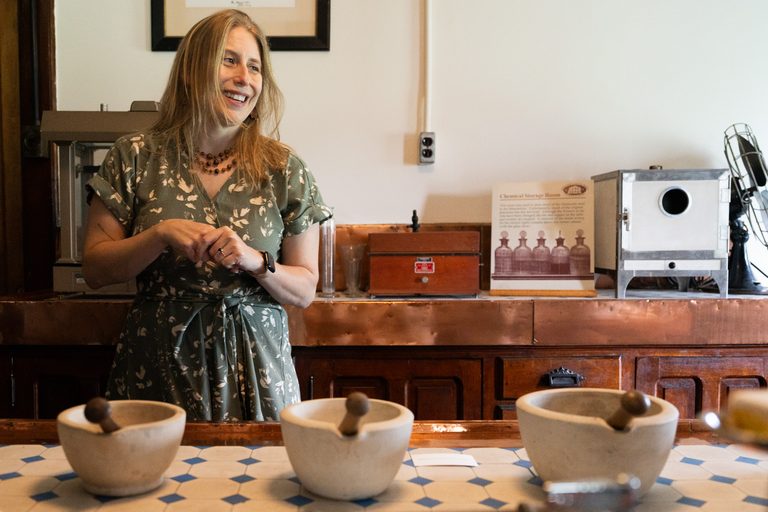
Indianapolis – The Indiana Medical History Museum on the near‑west side of the city opened a personal exhibit that puts a human face on the nation’s battle with polio. Curator Danielle Thomas, 31, created the display around her own grandfather, Robert Ailor, who contracted polio at age five in the summer of 1945. A black‑and‑white photograph shows Ailor and other boys in wheelchairs on the steps of Riley Children’s Hospital, a stark reminder of a disease that once crippled hundreds of thousands of Americans before the 1955 vaccine was introduced.
Thomas said she wanted visitors to understand what polio looked like for a child. “Polio has fallen out of common memory,” she explained. The exhibit pairs Ailor’s photos with a leg brace, a polio‑vaccine vial from Eli Lilly, and a replica of an iron lung that once helped children breathe when the virus paralyzed their chest muscles.
Executive director Sarah Halter noted that the museum, located on the former grounds of Central State Hospital, also showcases other historic health threats, including jars of brains from syphilis patients and a laboratory used to study bacteria. “It’s strange how we live through these things and then there’s this collective forgetting,” Halter said, adding that the next epidemic may arrive before the public remembers the lessons of the past.
Vaccination rates dip, disease resurfaces
Health officials point to the museum’s timing as a warning sign. While polio was declared eliminated in the United States in 1979, a case appeared in New York in 2022 when an unvaccinated adult contracted the disease. Likewise, measles—once eliminated nationwide—has sparked outbreaks in 46 states this year. Indiana reported two cases in Parke County in August, and officials fear further spread as the state’s largest festival approaches in October.
State data show only 82 % of kindergarteners in Marion County met immunization requirements for the 2025‑2026 school year, well below the 95 % threshold needed for herd immunity. Recent classes of kindergarteners, first‑graders, seventh‑graders and high school seniors also fell short of that benchmark for the measles‑mumps‑rubella (MMR) vaccine.
“In a way, vaccines are a victim of their own success,” said Sara Dillard, communications director for the Indiana Immunization Coalition, a nonprofit that works to raise vaccination rates. “Now you have people who have never seen what polio does. You have young doctors who have to learn about measles.”
Dillard identified two primary causes for the decline: limited access to health care in some communities and vaccine hesitancy fueled by misinformation. The COVID‑19 pandemic, which claimed at least 22,000 Hoosier lives, also amplified anti‑vaccine sentiment.
Under the second Trump administration, Robert F. Kennedy Jr., then head of the U.S. Department of Health and Human Services, scaled back federal vaccine recommendations and promoted false claims linking immunizations to autism. Many Indianapolis physicians continue to advise families to follow the established schedule, which includes shots for hepatitis A and B, rotavirus, flu, meningitis, COVID‑19 and respiratory syncytial virus.
Family reflections
Thomas, who also works as a manager at the state medical history museum, recalls her grandfather’s daily routine—white T‑shirt, blue jeans, black cowboy boots, and a single leg brace. “Unless you want your kid to end up like me, take another look at it,” she said, echoing Ailor’s warning to families who choose to forego vaccination.
The museum is open Wednesday through Saturday, 10 a.m. to 4 p.m., at 3270 Kirkbride Way. Admission is $10 for adults, $9 for seniors, $7 for college students, and $5 for children under 18.
Original reporting: Mirror Indy — read the source article.