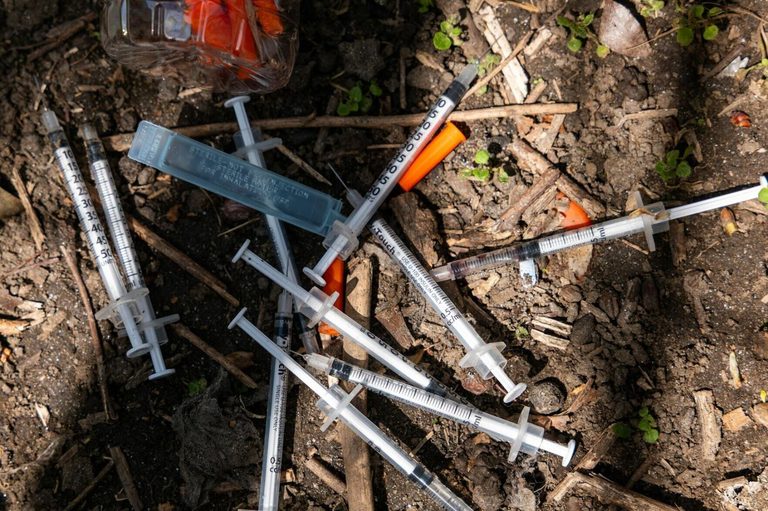
In May 2024 the Pueblo City Council voted to halt the distribution of clean syringes through the city’s two syringe service programs, citing concerns about syringe litter in parks and parking lots. Three weeks later, a Pueblo District Court judge overturned the ordinance after the Colorado American Civil Liberties Union argued it violated state law.
Study of the ban’s immediate impact
Researchers from the University of Colorado partnered with local harm‑reduction leaders to track the ban’s effects. They examined data from one of the city’s syringe exchanges and the Pueblo Department of Parks and Recreation, measuring weekly syringe distribution, litter collection, visits to the exchange, and naloxone kits handed out.
During the three‑week ban, syringe distribution fell by roughly 2,400 units per week and litter collection dropped by about 120 units per week. After the court’s reversal, the amount of discarded syringes on public land did not climb back to pre‑ban levels, even as distribution rose above the original baseline. Researchers attribute this to pent‑up demand for clean syringes and heightened awareness of proper disposal promoted by the exchange.
Health services suffered
More troubling were the declines in other vital services. Weekly visits to the exchange and the number of naloxone kits distributed remained below expected levels for the 20 weeks following the ban. The exchange distributed about 125 naloxone kits per week, short of the projected 150 kits. Over the observation period, the researchers estimate the ban resulted in roughly 900 fewer naloxone kits reaching the community.
Public‑health research indicates that one overdose death is prevented for every 230 naloxone kits distributed. By that metric, the brief ban may have contributed to several preventable overdose fatalities. Fewer visits also meant reduced opportunities for opioid‑use disorder treatment referrals, HIV and hepatitis C testing, and connections to housing and other social services.
Broader context
Colorado authorized syringe service programs in 2010, and Pueblo’s two exchanges have operated since 2014 and 2017. Nationwide, more than 400 exchanges exist, providing clean syringes, naloxone, and linkage to care. Decades of evidence show such programs lower HIV transmission, encourage treatment entry, and do not increase crime or litter. In fact, participants are less likely to discard syringes improperly because exchanges promote safe return.
Across the United States, several municipalities—from California to West Virginia—have reduced or eliminated syringe services. At the federal level, an executive order issued in July 2025 barred federal funds from purchasing syringes, cutting a key funding source for many exchanges.
Implications for Pueblo families
The original ban was driven by concerns from parents and community members about visible syringes in public spaces. The study’s findings suggest that restricting harm‑reduction services can unintentionally jeopardize public‑health outcomes that affect families, such as overdose deaths and infectious‑disease spread. Local leaders and faith‑based groups may now weigh the balance between clean‑up concerns and the proven health benefits of syringe exchanges.
While the ban’s reversal prevented a rise in litter, the lingering dip in naloxone distribution and clinic visits underscores the need for continued support of evidence‑based public‑health programs. Pueblo’s experience offers a cautionary example for other Colorado cities considering similar restrictions.
Original reporting: KTBS 3 (Shreveport) — read the source article.