Washington – President Trump confirmed Tuesday that U.S. forces carried out targeted airstrikes against Iran following a wave of Iranian missile and drone attacks. The strikes hit radar installations and a coastal home where a wedding was taking place in Hormozgan Province, killing two civilians and wounding dozens, according to local officials.
Why the strikes were ordered
U.S. Central Command said the actions were a direct response to Iranian attempts to threaten commercial shipping and U.S. personnel in the Strait of Hormuz. “U.S. forces took limited, precise action against IRGC minelaying forces posing an imminent threat in the Strait of Hormuz,” the command stated on X. The administration argues the limited strikes were necessary to protect civilian mariners, commercial trade, and the free flow of global commerce.
President Trump’s response
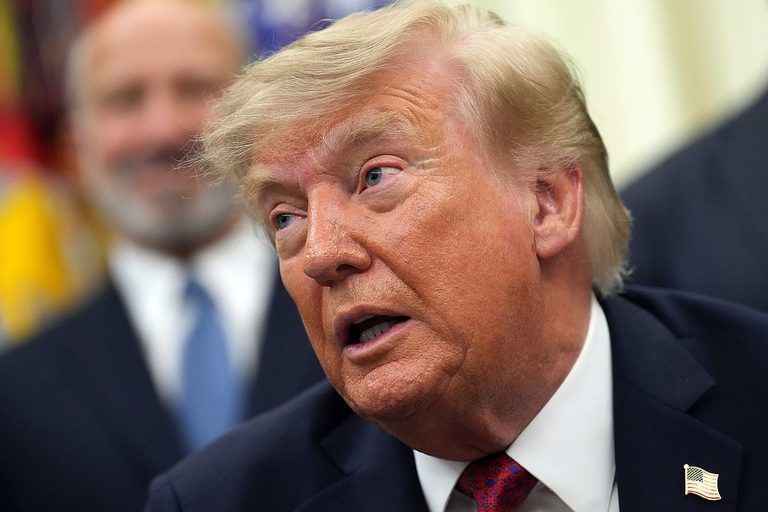
Speaking on social media, President Trump warned that any further Iranian retaliation would be met with “a much harder and higher level” of force, adding that a larger attack is already being prepared. In a phone interview with Fox News, Trump explained that the U.S. targeted Iranian radars that were being rebuilt, saying, “They tried to rebuild their radar because they can’t see anything. We waited until it was almost built and then we hit it.”
Iran’s reaction
Iranian state media reported that the U.S. also struck a fish‑meal factory on Qeshm Island, a fishing pier in Sirik, and the civilian Jiroft Airport in Kerman Province. The Revolutionary Guard’s paramilitary wing warned of “crushing and devastating blows” against the United States, claiming the attacks have only strengthened Iran’s resolve and tightened its closure of the Strait of Hormuz, a vital oil corridor that normally carries about 20% of the world’s oil.
Impact on oil markets
Renewed hostilities have pushed crude prices higher. After a 7% weekly gain, gasoline prices rose to $4.10 per gallon, according to the American Automobile Association. The price surge reflects market anxiety over the security of the Strait of Hormuz, where Iran has effectively limited traffic since the conflict began.
Political backdrop
The strikes come as the Trump administration continues its strategy of economic pressure on Tehran, hoping to force Iran back to a cease‑fire agreement reached in June. Iranian President Masoud Pezeshkian told reporters at the Shanghai Cooperation Organization summit that Iran would return to the interim cease‑fire if Washington honors its commitments.
Congressional leaders on both sides of the aisle have expressed concern about the conflict’s popularity with the American public. While some Republicans view the limited strikes as a necessary show of strength, others warn that an escalation could jeopardize the upcoming midterm elections and further destabilize global oil markets.
Looking ahead
The administration says the current actions are limited and precise, but President Trump acknowledged that additional strikes may be required if Iran continues its aggression. U.S. forces remain on alert in the region, and the situation will be closely monitored as both sides assess the next steps.
Original reporting: Texarkana Gazette — read the source article.