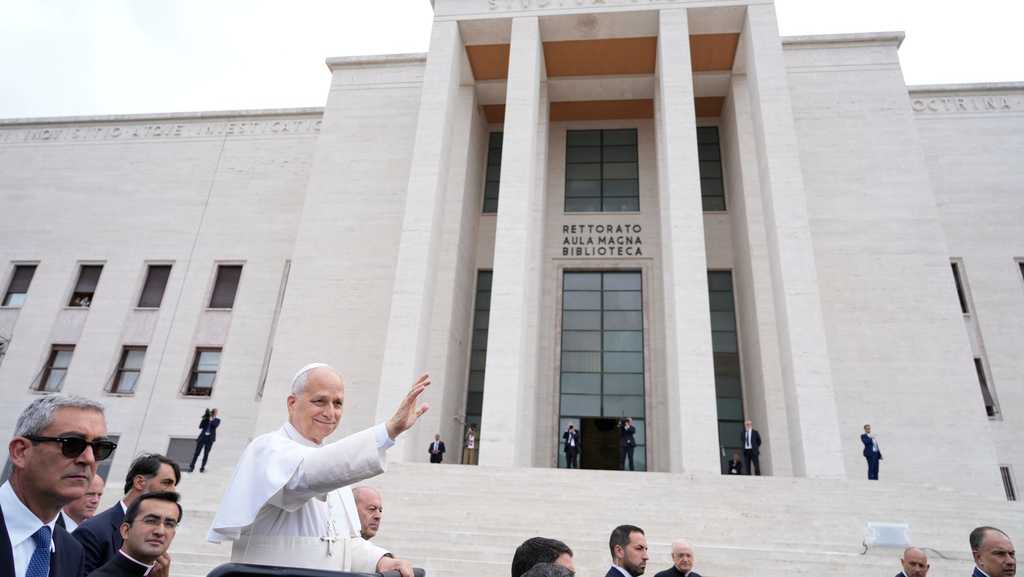
Pope Leo XIV visited Europe’s largest university and used the moment to urge an end to violence in the Middle East and in Ukraine, calling for concrete steps toward peace and humanitarian relief during his address to students and faculty.
The packed lecture hall felt less like a classroom and more like a pulpit when Pope Leo XIV stepped up and made a plea that echoed beyond the campus walls. He framed his remarks around the human cost of conflict, naming both the Middle East and Ukraine as urgent crises in need of attention. The tone was direct and personal, aiming to reach people who study, teach, and shape tomorrow’s leaders.
He did not offer detailed policy prescriptions, but he stressed the moral imperative: civilians cannot carry the burden of geopolitical struggles forever. By linking the two regions in one appeal, the pope highlighted how local wars have global consequences for refugees, food supplies, and international law. That framing pushed the conversation from abstract geopolitics back to the faces and families living through daily danger.
Students and professors reacted with a mix of applause and reflective silence, the kind of response you get when moral arguments cut through political noise. Conversations spilled into campus corridors, where people compared testimonies and news accounts about civilians caught in bombings and sieges. The visit turned a university space into a forum for public conscience, at least for a day.
For diplomats and humanitarian groups, the pope’s words are another lever to push toward ceasefires, corridors for aid, and prisoner exchanges. Religious appeals can’t force ceasefires but they can nudge public opinion and give negotiators moral backing when they seek breathing room to get aid through. That influence matters, especially in places where trust between warring parties is nearly gone.
Pope Leo XIV’s visit also underscored the role universities play in shaping civic debate on international crises. Campuses are where future policymakers, aid workers, and journalists first wrestle with complexity and responsibility, and a high-profile call for peace sharpens that mission. It was a reminder that academic life and real-world suffering are not separate arenas but parts of one conversation.
The pope acknowledged the limits of words in the face of entrenched violence, yet he insisted language still has power to mobilize relief and pressure leaders. He pointed to hospitals overwhelmed by casualties and to families displaced from homes they once thought safe. Those images served as a call to practical charity as well as to political action.
Moving forward, the university community plans to keep the discussion alive through seminars, panels, and student-led initiatives focused on humanitarian response. Those activities are small-scale compared to diplomatic talks, but they cultivate a public that understands the stakes and can hold leaders to account. The pope’s brief but pointed visit left a practical question in the air: what will people on campus actually do with the call for peace?