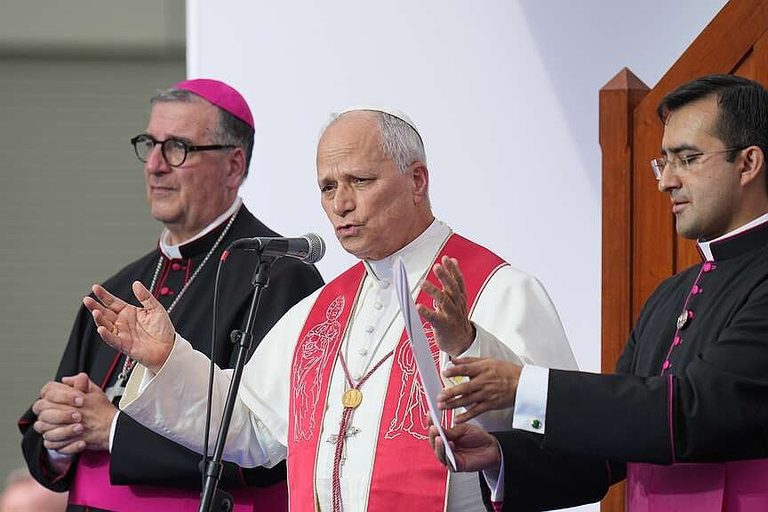
While visiting the famed pilgrimage site of Lourdes, France, Pope Leo XIV used his platform to speak directly to the nation’s recent end‑of‑life legislation. In a Mass attended by roughly 150,000 people – many in wheelchairs – the pontiff warned that legally permitting medically assisted death does not make it moral, describing the policy as “false compassion.”
Faith‑based defense of life
Leo’s remarks echoed the Catholic Church’s long‑standing doctrine that every human life is an inalienable gift, protected from conception until natural death. “It is precisely in the name of this dignity that we must reject the temptation to cause death under the guise of false compassion,” he told the crowd, which responded with applause.
The pope’s message came as France’s National Assembly, which in 2024 enshrined abortion as a constitutional right, gave final approval to a bill allowing adults with incurable illnesses to obtain lethal medication. Leo highlighted that “what is legal is not necessarily moral,” urging lawmakers and citizens to consider the deeper ethical implications.
Local impact and broader relevance
Although the legislation was passed in France, the issue resonates across the Atlantic, especially in the United States where several states, including Illinois – the pope’s home state – have recently enacted similar laws. Leo specifically referenced Illinois’ law that took effect on September 12, noting it as the 13th U.S. state to permit medically assisted death.
For families and faith communities in Texas and elsewhere, the pope’s stance reinforces the importance of protecting vulnerable individuals without resorting to state‑sanctioned death. The message aligns with the values of many Christian families who view life‑preserving care as a fundamental responsibility.
Meeting survivors of clergy abuse
In addition to his remarks on end‑of‑life care, Leo spent time with seven survivors of clergy sexual abuse, a practice that has become a regular part of papal visits abroad. Survivors praised the pope for listening and acknowledging their pain. Jean‑Marie Delbos, one of the survivors, said, “I never thought I would have a pope before me.”
During the meeting, the pope asked detailed questions about the victims’ experiences and urged the French bishops to remain vigilant in preventing future abuse. Monsignor Pierre‑Antoine Bozo, spokesperson for the French bishops’ conference, explained that the small, intimate setting was intentional to allow genuine dialogue.
Historical context of Lourdes
Lourdes, known worldwide for its reported miraculous cures, draws millions of pilgrims each year seeking physical and spiritual healing. The site has officially recognized 72 miracles, making the question of how to honor the dignity of the sick especially poignant.
Recent controversies have also surrounded the basilica’s artwork. The façade, designed by Rev. Marko Rupnik, is currently covered with curtains after allegations of abuse against the artist. Leo passed by the covered mosaics, underscoring the Church’s ongoing effort to address past wrongs while maintaining its mission of hope.
What this means for believers
For readers who hold Christian faith and traditional family values, Leo’s statements serve as a reminder that moral truth transcends legislative trends. The pope’s appeal to “false compassion” challenges both policymakers and citizens to consider the sanctity of life in all its stages, reinforcing a core tenet of Catholic teaching that aligns with the values of many American families.
Original reporting: Texarkana Gazette — read the source article.