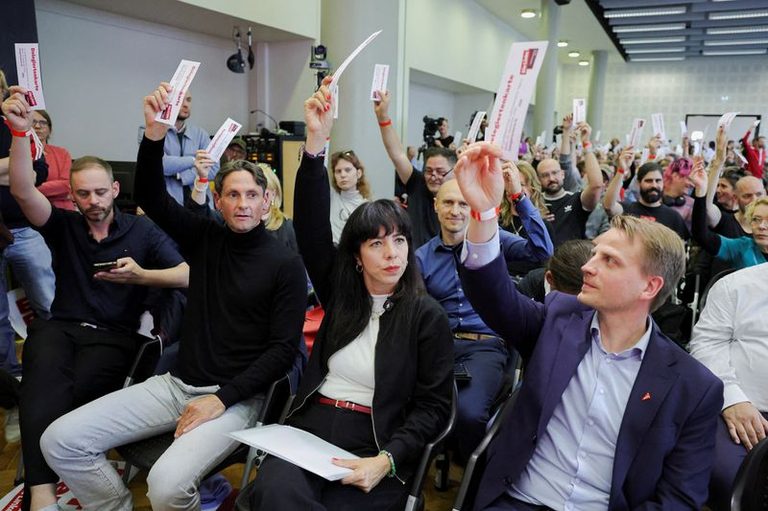
State elections in Germany this month have put the country’s domestic intelligence system under fresh scrutiny. The Alternative for Germany (AfD) came close to an absolute majority in Saxony‑Anhalt, while the Left Party topped the vote in Berlin. Both outcomes have prompted senior coalition figures to warn that secret information could be vulnerable to foreign adversaries or criminal networks if state security agencies fall under the control of these parties.
Security officials raise concerns
Germany’s federal structure gives each state its own domestic intelligence service, overseen by local governments but coordinated with the Federal Office for the Protection of the Constitution (BfV). Politicians from rival parties and former security officials fear that ministers from the AfD or the Left could allow confidential data to leak to Moscow or to groups linked to organised crime, particularly in Berlin.
“This concerns information relating to organised crime – that would be an issue in Berlin,” said Alexander Hoffmann, head of the parliamentary group of the Christian Social Union (CSU), the Bavarian sister party of Chancellor Friedrich Merz’s Christian Democrats (CDU). “And it’s about issues concerning Russia – that would be Saxony‑Anhalt,” he added.
Party responses
The AfD rejected accusations that it is aligned with Russian President Vladimir Putin, insisting it merely seeks to avoid war and opposes German military support for Ukraine. An AfD spokesperson called the government’s warnings “clutching at straws” and said the party has never seen evidence of the alleged ties.
The Left Party has not yet commented, but its leaders have previously warned against any association with what German police label as clan‑related crime within Kurdish, Lebanese and Palestinian communities in Berlin. The party also denies accusations of antisemitism.
Potential policy moves
Since opinion polls suggested a possible AfD victory in Saxony‑Anhalt, discussions about restricting confidential information sharing have intensified. Hendrik Wüst, the CDU premier of North Rhine‑Westphalia, called for a special federal‑state committee to examine how to handle information sharing with an AfD‑led government.
One unnamed security official said preparations are under way, but noted that it remains unclear whether the AfD or the Left will actually form governments. The AfD fell short of an absolute majority, limiting its coalition options, while the Left is likely to seek a partnership with the centre‑left Social Democrats and the Greens, who have demanded action on antisemitism.
Balancing security and democratic oversight
Domestic security agencies are now weighing whether to limit data flow to state governments, though officials stress they would not cut off all sharing, especially where there are indications of potential terrorist attacks. Left Party representatives argue that terms like “clan‑related crime” unfairly stigmatise entire ethnic communities and that contact with local residents does not imply support for criminal activity.
The Left’s Berlin campaign proposes abolishing the state security agency and replacing it with a “transparent, democratically controlled body that is close to the people.” Meanwhile, a Left member of the federal parliament acknowledged a social‑media contact with a family member accused of involvement in criminal groups and pledged to review his communication style.
These debates highlight the tension between protecting national security and preserving democratic oversight in Germany’s federal system.
Original reporting: Appleton, WI News Feed (HLL/CB) — read the source article.