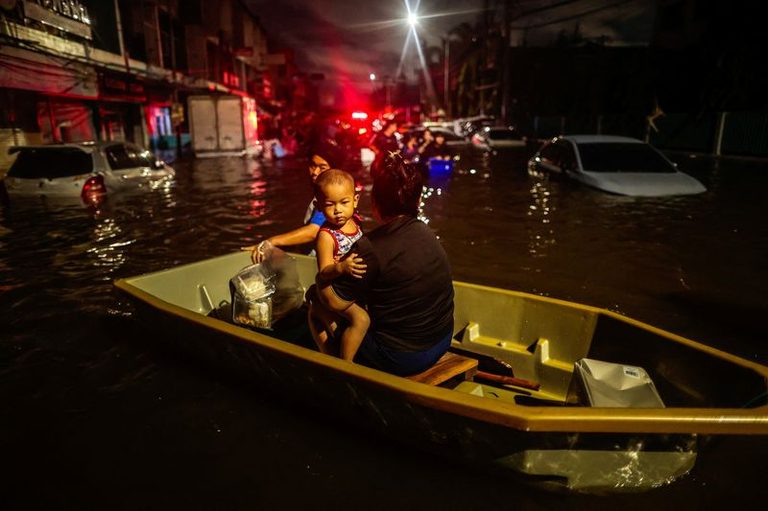
Bangkok’s city administration reported that at least 5,901 people are now staying in 234 evacuation centres after intense weekend rains swamped large parts of the capital. The deluge, which delivered roughly 320 mm (12.6 inches) of rain in two to three days, left entire neighbourhoods underwater and overwhelmed the city’s drainage system.
Scale of the disaster
According to Unsit Sampuntharat, the permanent secretary of Thailand’s interior ministry, more than 80,000 residents remain trapped in flooded areas and cannot leave their homes. The ministry estimates that the floods have affected over 580,000 homes across 41 provinces since September 16, with at least eight fatalities reported.
Economic analysts at Rangsit University warn that the damage could shave 0.3 percentage points off Thailand’s projected GDP growth for the year, reducing the forecast to 2.1 percent and cutting third‑quarter growth by about 0.5 percentage points to 1.7 percent.
Relief efforts underway
City officials say mobile kitchens and boats are being deployed to deliver three meals a day to residents throughout the flooding period and for at least a week after waters recede. The goal is to ensure that those displaced have consistent access to food and basic supplies.
In the hard‑hit Bang Kapi neighbourhood, residents waded through waist‑deep water to purchase essentials from vendors who set up floating stalls in plastic containers and drums. The scene underscores the resilience of Bangkok’s citizens and the ingenuity of local businesses trying to stay afloat.
Long‑term challenges
Bangkok sits on a river delta only about 1.5 m (5 ft) above sea level and is sinking several millimetres each year. Combined with a six‑month rainy season, the city faces recurring flood threats. The eastern province of Rayong, a key industrial hub, also ordered evacuations after two reservoirs overflowed.
Last year’s southern floods, triggered by 630 mm (25 inches) of rain over three days, killed at least 145 people and damaged more than 33,000 homes, highlighting the growing vulnerability of Thailand’s low‑lying regions.
Looking ahead
Authorities continue to monitor water levels and coordinate with the military and local volunteers to assist displaced families. While the immediate focus is on rescue and relief, city planners are urged to consider longer‑term flood mitigation measures to protect Bangkok’s 8.4 million residents from future disasters.
Original reporting: Appleton, WI News Feed (HLL/CB) — read the source article.