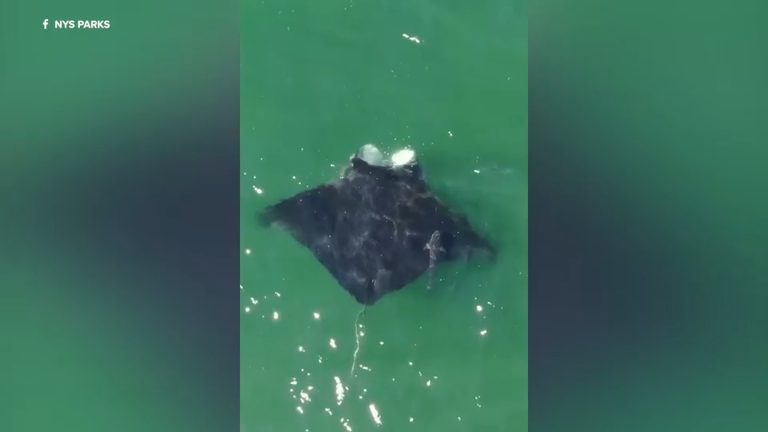
The New York State Department of Environmental Conservation (DEC) released video this week showing an oceanic manta ray gliding just offshore of Jones Beach State Park on Long Island. The footage, taken during the warm summer season, shows the giant ray moving slowly near the surface as it filters zooplankton from the water.
What is an oceanic manta ray?
Oceanic manta rays (Manta birostris) are the largest species of ray in the world. Adults can weigh more than 4,000 pounds and have a wingspan that rivals a small airplane. They are filter feeders, consuming large quantities of zooplankton when they come close to shore. In deeper water they may also hunt medium‑sized fish. The species typically inhabits tropical, subtropical and temperate oceans, but occasional sightings have been recorded in the mid‑Atlantic and New England waters during warm months.
Why the sighting matters locally
While manta rays are not common in New York, the DEC notes that the warm summer temperatures can draw these gentle giants closer to the coastline. For local anglers, beachgoers, and marine‑enthusiasts, the appearance of such a large, graceful creature is a reminder of the diverse marine life that can be found in Long Island’s waters. The department did not release the exact time or date of the sighting, but the video was posted on its official website on August 22, 2026.
Conservation context
Oceanic manta rays are listed as vulnerable by the International Union for Conservation of Nature (IUCN) due to threats such as bycatch, habitat degradation, and illegal fishing. The DEC’s decision to share the video underscores its commitment to public education about marine species and the importance of protecting New York’s coastal ecosystems. Residents are encouraged to report unusual marine sightings to the DEC, which helps scientists track the movements of these migratory animals.
What to expect this summer
As water temperatures remain elevated through the late summer, the DEC advises beach visitors to remain aware of marine life, keep a respectful distance, and avoid feeding wildlife. The agency also reminds the public that manta rays are protected under both state and federal law; harming or harassing them can result in significant penalties.
For those interested in learning more, the DEC offers educational resources on its website, including information on local marine species, safe wildlife‑watching practices, and ways to support ocean conservation efforts.
Original reporting: Brookhaven News – ABC7 New York — read the source article.