The National Transportation Safety Board released an initial look at the fatal April 19 crash that killed 59-year-old Michael Bailey after a brief flight from Tampa North Aero Park. The single-engine airplane lifted off from the small airfield in Pasco County, climbed a few hundred feet, then crashed in the Grand Oaks subdivision on Aldus Drive in Land O’ Lakes, Florida, leaving investigators with burned wreckage and limited instrument data.
Surveillance footage and radar traces form the backbone of the early NTSB account, since fire damage destroyed most onboard instruments. Airport video shows Bailey arriving earlier in a separate airplane, then boarding the second aircraft, starting both engines and performing a run-up at the field. Investigators reported no obvious issues during engine start or the taxi and run-up sequence.
The takeoff sequence lasted only moments. Track information indicates the airplane climbed to roughly 100 feet at 81 knots, then continued climbing to about 300 feet while accelerating to 86 knots before slowing to 79 knots and disappearing from the recorded track. NTSB concluded the entire flight lasted about 30 seconds from liftoff to impact.
Witnesses described hearing the airplane low and struggling, with engine noise that suggested decreasing power. One bystander reported watching the aircraft enter a descending left turn, then make a brief right turn and slight climb before it “dropped out of the sky.” Those accounts help shape the timeline but cannot, on their own, explain the mechanical or aerodynamic forces at work.
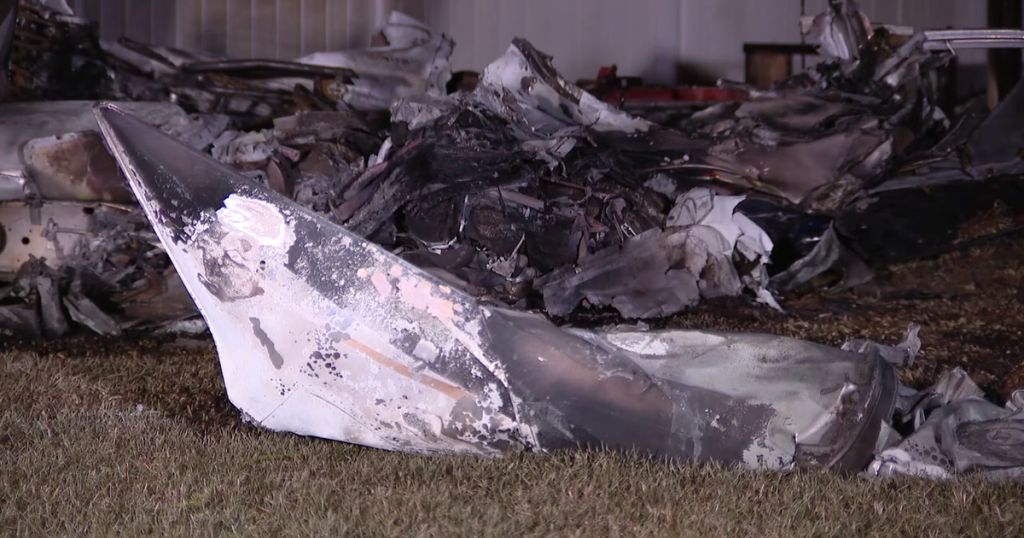
When first responders reached the crash scene on Aldus Drive in the Grand Oaks neighborhood, they found the fuselage heavily fragmented and the cockpit and cabin largely consumed by fire. Thermal effects rendered most instrument indications unreliable, and the panel and cockpit switches were destroyed. The landing gear was noted to be retracted, consistent with an aircraft that was airborne at the time of impact.
Because fire and impact damage removed many of the usual forensic clues, the NTSB has retained the airplane for detailed examination. That work will include metallurgical study, engine teardown, and any parts analysis that can survive heat and trauma. Even with a retained airframe, investigators often face an uphill battle when wiring, instruments, and controls are warped or burned beyond recognition.
Local terrain and the short flight profile add complicating factors. Tampa North Aero Park is a small field in the corridor between Wesley Chapel Boulevard and I-75, leaving little room for a pilot to reject a takeoff or troubleshoot a developing emergency after liftoff. The rapid sequence from run-up to impact means crews had only seconds to recognize a problem and attempt recovery, which limits the usefulness of human performance analysis in this early stage.
Flight data beyond ground surveillance and basic track points is scarce because the airplane did not appear to carry a recorded-data device that survived the crash. With primary cockpit instruments destroyed and no flight recorder, investigators must stitch together timelines from ATC, radar, cellphone video, and witness statements. That evidence can establish what happened in broad strokes, but it often leaves the specific causal chain — mechanical failure, fuel issue, control anomaly, or other factors — unresolved until detailed examination yields more clues.
For now, the NTSB has classified the matter as an ongoing investigation and will release updates as meaningful findings emerge. Authorities confirmed the pilot as Michael Bailey and said the wreckage remains secured for analysis. Residents in the Grand Oaks subdivision continue to process the shock of a low-altitude crash in a quiet neighborhood, while aviation investigators work methodically through the parts that survived to determine what led to those final 30 seconds.