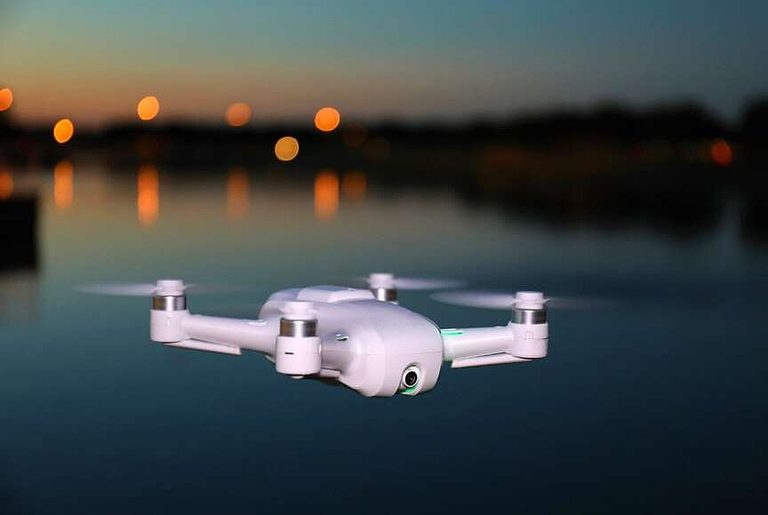
During a recent demonstration at a Dallas stadium, Ericsson Americas employees showcased a “friendly drone” that detected and neutralized a rogue UAV in real time. The exercise underscored a growing security challenge: as drones become commonplace, they also pose serious risks to high‑profile events such as sports games, concerts and political rallies.
Local expertise fuels national demand
North Texas, already home to major aerospace and defense firms, is emerging as a key center for counter‑drone solutions. “We’re a finance hub, but we’re also a technology hub,” said Steven Haynes, director of the cybersecurity and risk management program at the University of Texas at Dallas’ Naveen Jindal School of Management. He expects the region to continue testing, building and deploying advanced detection and mitigation systems.
Industry players are developing a range of technologies, from radar and acoustic sensors that spot unauthorized UAVs to jamming, spoofing and electromagnetic‑pulse guns that can force a drone to land or destroy it. Northrop Grumman, for example, offers a suite of counter‑drone products—including a new cannon‑like weapon called Raid Hunter—designed to protect military bases and critical civilian sites such as ports of entry.
Economic impact and federal support
Analysts estimate the U.S. counter‑drone sector is already worth several billion dollars and is set to grow dramatically, especially after the World Cup security operation brought the issue to the attention of municipalities nationwide. Federal funding is also flowing: a $500 million FEMA grant program helps local governments acquire detection and mitigation tools, and experts anticipate larger contracts once a major drone‑related incident occurs.
Robert Lewin, director of business development at Northrop Grumman, noted strong demand from both the U.S. Army and Air Force for integrated counter‑drone packages that include command‑and‑control systems and high‑fidelity radar.
Local law‑enforcement already adopting the technology
North Texas jurisdictions have been early adopters. In 2018, the Fort Worth Police Department and Denton County Sheriff’s Office partnered with neighboring agencies to protect NASCAR events at Texas Motor Speedway using counter‑drone systems. Such collaborations demonstrate how regional public‑safety agencies are staying ahead of aerial threats.
“We used to screen everyone entering the stadium,” said Sonny Beech, an executive at Detroit‑based Airspace Link. “Now we also have to defend from the air,” highlighting the new complexity that local officials must manage.
Looking ahead
With an estimated 27 million American drone owners as of 2024 and projections of 800 million drone deliveries annually by 2036, the potential for misuse remains high. Experts warn that a single malicious drone could cause catastrophic harm at a crowded event, making the need for robust detection and response systems urgent.
As North Texas firms continue to innovate and secure federal contracts, the region is set to play a pivotal role in safeguarding the nation’s airspace while driving economic growth in a high‑tech, defense‑focused sector.
Original reporting: Texarkana Gazette — read the source article.