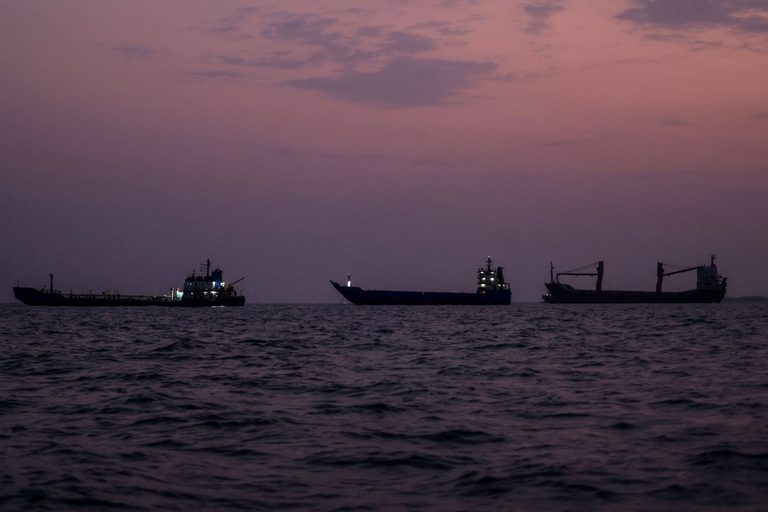
Oman’s foreign minister Badr Albusaidi announced on X that the regional summit scheduled for Monday in Salalah to explore an Omani proposal for reopening the Strait of Hormuz has been postponed indefinitely. The meeting, which would have taken place without U.S. participation, was intended to create a legal framework for voluntary contributions to navigation safety and environmental protection.
U.S. stance under President Trump
President Trump has repeatedly said the waterway is “acceptable for now” as U.S. warships escort commercial tankers through the strait. In a Truth Social post, he emphasized that the United States now has “almost total control of the Hormuz Strait” and that Iran’s economy is “totally collapsing.” Trump administration officials have privately told Gulf partners that future U.S.–Iran talks will focus on Tehran’s nuclear program, not on reopening the strait.
“We don’t want to talk about the strait, and that is the position of the administration right now — we’re only going to talk to you if you want to talk about the nuclear file,” a senior official told reporters.
Regional concerns and proposals
Sources said the Omani draft includes voluntary payments for navigational safety and environmental protection, avoiding mandatory tolls that Gulf states, especially Saudi Arabia, have long rejected. Saudi Arabia submitted amendments fearing the language could create a new status quo unfavorable to GCC members.
While Iran has signaled willingness to discuss nuclear negotiations once the strait issue is settled, the prospect of mandatory fees remains a major sticking point. Before the conflict, the strait operated without any charges; many regional diplomats stress that any new fees must be symbolic to preserve face for both sides.
U.S. military involvement
U.S. naval forces continue to escort up to 40 commercial vessels per day, a capability the administration says demonstrates American dominance in the waterway. However, officials acknowledge the long‑term sustainability of such a massive commitment is uncertain.
Vice President JD Vance recently reiterated that the United States is the only country capable of ensuring control over the Strait of Hormuz, underscoring the administration’s belief that American presence remains the key to regional stability.
Implications for future diplomacy
Even without a formal U.S. role at the postponed meeting, Trump administration officials have reviewed Oman’s proposals and recognize the need for a framework that can eventually support broader diplomatic efforts, including nuclear talks and a post‑war resolution.
Energy analysts note that while alternative routes for oil exports have been developed, the strategic importance of the strait endures, especially as Houthi attacks threaten Red Sea passages. Treasury Secretary Scott Bessent has suggested the strait could become “like a worthless piece of water” within two years, a claim the administration has downplayed.
For Gulf states and U.S. policymakers alike, the challenge remains to balance immediate security needs with a long‑term diplomatic solution that safeguards both commercial shipping and regional stability.
Original reporting: KRDO (Colorado Springs metro) — read the source article.