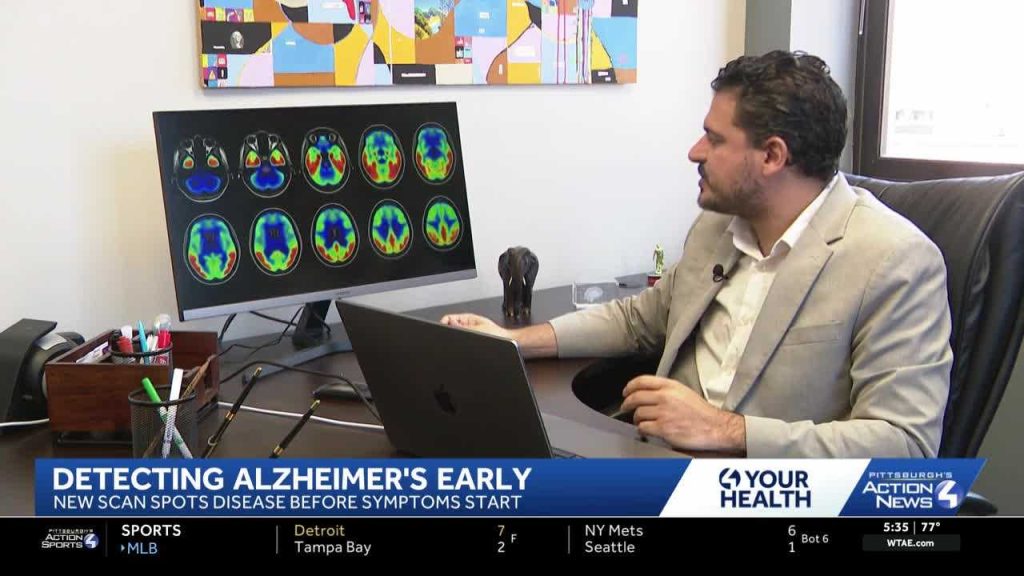
In a promising development for Alzheimer’s research, scientists at the University of Pittsburgh Medical Center and the University of Pittsburgh School of Medicine have unveiled a new brain imaging test. This innovative test is designed to detect Alzheimer’s disease with greater precision, offering hope for earlier intervention and treatment.
Advancements in Early Detection
Dr. Tharick Pascoal, a neurologist at UPMC and co-author of an Alzheimer’s disease report published in The Lancet, emphasized the importance of early detection. “In early detection, we know that it is very important to have new therapies that are coming and emerging because these treatments work much better in people who still do not have major symptoms,” Dr. Pascoal stated.
The study highlights the imaging test’s ability to identify tau protein, a biological marker closely associated with symptoms and future decline in Alzheimer’s patients. This advancement could significantly impact the way Alzheimer’s is diagnosed and treated in the United States, Canada, and Europe.
Understanding Tau Protein
The presence of tau protein in the brain is a critical indicator of Alzheimer’s progression. Dr. Pascoal explained, “If you find tau pathology in the brain of the patient, very likely these individuals are going to clinically progress, even develop dementia in the coming few months or years.” This new imaging technology allows for the clear identification of tau protein, potentially enabling earlier and more effective treatment strategies.
The research is part of a larger program initiated in 2021, when the University of Pittsburgh received over $40 million to study tau protein. The funding has facilitated significant advancements in understanding and detecting Alzheimer’s disease.
Symptoms and Future Implications
Doctors advise that symptoms to watch for include memory loss, difficulty finding the right words, and challenges in completing tasks with multiple steps. Early detection and treatment could greatly improve the quality of life for those affected by Alzheimer’s.
This breakthrough in imaging technology represents a significant step forward in the fight against Alzheimer’s, providing hope for patients and their families. As research continues, the potential for earlier and more effective treatments becomes increasingly attainable.
Original reporting: KCCI Des Moines — read the source article.