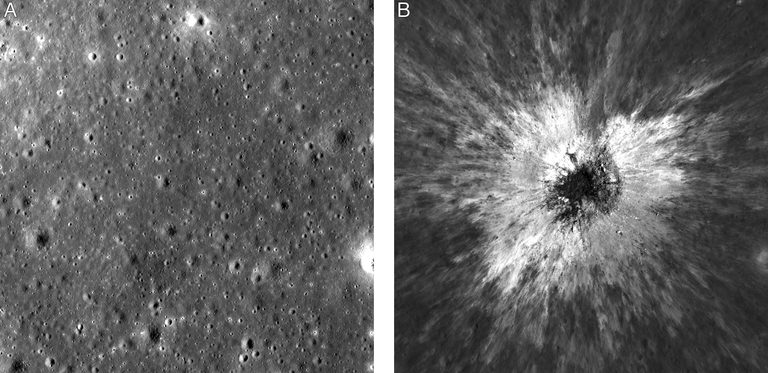
NASA’s Lunar Reconnaissance Orbiter (LRO) has revealed a striking new crater on the moon’s near side, measuring roughly 728 feet (222 meters) across and up to 141 feet (43 meters) deep. The impact, which occurred about two years ago, escaped real‑time detection by Earth‑based and space‑based telescopes, but was uncovered when researchers sifted through LRO’s wide‑angle images in August 2025.
Why the crater matters
Scientists describe the feature as the largest known recent impact crater in the solar system. Such an event is estimated to happen only once every 132 years, making it a rare natural laboratory for studying lunar geology and the effects of high‑velocity impacts.
“This event constitutes a statistically rare, effectively once‑in‑a‑lifetime observation,” the authors wrote in two studies published in Science Advances on Wednesday. The crater, named for the late Thomas McGetchin, former director of Houston’s Lunar and Planetary Institute, is three times larger than the previous record‑holder identified by LRO a decade ago.
Scientific insights
Mark Robinson, chief scientist for LRO’s cameras and a researcher at Intuitive Machines, explained that the impact churned lunar surface material for more than 66 miles (100 kilometers). The force ejected dust and rock at a steeper angle than expected, creating a “cold spot” – a 4‑mile‑wide (7‑kilometer) region of loosened regolith surrounding the crater. Co‑author David Paige of UCLA likened the process to gardening, saying scientists are now viewing impacts as a way to “garden the regolith,” bringing deeper material to the surface.
Robinson also noted that the moon’s top inch (2 centimeters) of soil is turned over by such events roughly every 80,000 years, faster than earlier estimates. This overturning suggests that the iconic footprints left by Apollo astronauts will not endure indefinitely; they are expected to disappear within that time frame.
Implications for future lunar bases
The discovery arrives as NASA prepares to establish a permanent human presence on the moon. Understanding the frequency and distribution of impact‑generated ejecta is crucial for designing habitats that can withstand potential debris strikes.
“Calculating the risk of ejected material hitting a future base will help engineers harden structures so we won’t have to worry as much about damage,” Robinson said. This data will feed directly into safety protocols for the Artemis program and subsequent commercial lunar endeavors.
Looking ahead
Researchers will continue to monitor the crater and its surrounding cold spot, using LRO’s high‑resolution imaging to track changes over time. The findings not only enrich scientific knowledge of lunar processes but also provide practical guidance for protecting the next generation of explorers on the moon.
Original reporting: Alexandria, VA News – WTOP News — read the source article.