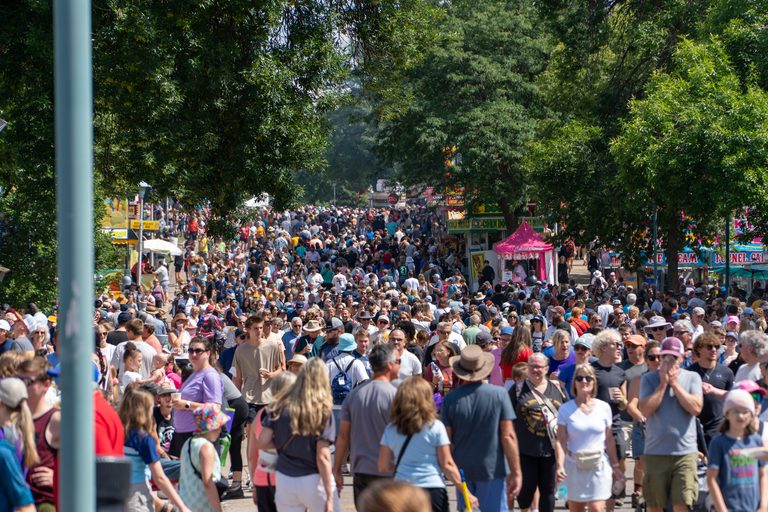
Ramsey County District Court heard arguments on Wednesday about temporary injunctions that would prevent ten individuals, identified as alleged members of the Muddy and The Ville gangs, from congregating at the Minnesota State Fair. The state and local prosecutors say the measure is needed to protect fairgoers after a series of violent incidents near the fairgrounds in recent years.
Legal basis and evidence presented
Assistant Attorney General Keaon Dousti and Ramsey County Attorney’s Office attorneys argued that the injunctions are narrowly tailored to the fair’s 12‑day period and a limited geographic area. They relied on testimony from Ramsey County Sheriff’s Office gang investigator Ben Seidl, who explained that Minnesota law defines a gang using a nine‑point criteria list. At least three points—such as identification by a reliable source, repeated arrests, or displaying gang signs—must be met for a person to be classified as a gang member.
Prosecutors presented social‑media screenshots showing the defendants making gang signs, surveillance video of a coffee‑shop brawl, and arrest records to satisfy the statutory requirements. The court was also shown that a 2024 shooting occurred just outside the fairgrounds in Falcon Heights, a 2025 brawl took place inside the fairgrounds, and a May 2026 shooting happened near the Metro State University graduation venue in St. Paul.
Injunction details and defendant response
The proposed orders would not bar the individuals from entering the fair entirely. Instead, they would prohibit the ten named defendants from associating with each other while on or around the fairgrounds. They could still attend with family members or friends who are not named in the lawsuits.
Six of the ten alleged members agreed to the injunctions, denying the allegations but waiving their right to attend the fair for its duration. In exchange, prosecutors said the civil claims would be dismissed after the fair concludes. The remaining four defendants responded differently: two did not appear or retain counsel, prompting prosecutors to seek default judgments; the other two—Bilal Farah and Nasrudin Warsame—retained attorneys and challenged the injunctions as overbroad and a violation of their constitutional rights.
Attorney Eric Rice, representing Farah, argued that the process denied due‑process protections, noting the rushed timeline and lack of full disclosure. He likened the situation to “more due process in a phone‑bill dispute than in this case.” Assistant Attorney General Jacob Harris countered that the injunctions are narrowly focused on the fair’s specific timeframe and location.
Law enforcement presence and community concerns
More than 100 Ramsey County deputies, alongside over 140 Minnesota State Fair Police officers and additional personnel from the Minnesota State Patrol, St. Paul Police Department, and the Department of Natural Resources, will be on site during the fair. Ramsey County Undersheriff Mike Martin said a special Field Identification Team, composed of deputies familiar with the individuals, will help avoid mistaken identification.
Judge Sara Grewing is expected to issue a ruling by Thursday. The fair opens on Aug. 27 and runs through Labor Day, drawing hundreds of thousands of visitors each year.
Constitutional and public‑safety implications
The case highlights the tension between community safety and individual constitutional protections. While prosecutors emphasize the need to prevent further violence, the defendants and their counsel stress the importance of due‑process rights and caution against setting a precedent that could limit lawful assembly.
Local residents and community leaders are watching closely, as the outcome may influence how law‑enforcement agencies address gang‑related concerns at large public events throughout Minnesota.
Original reporting: Sahan Journal — read the source article.