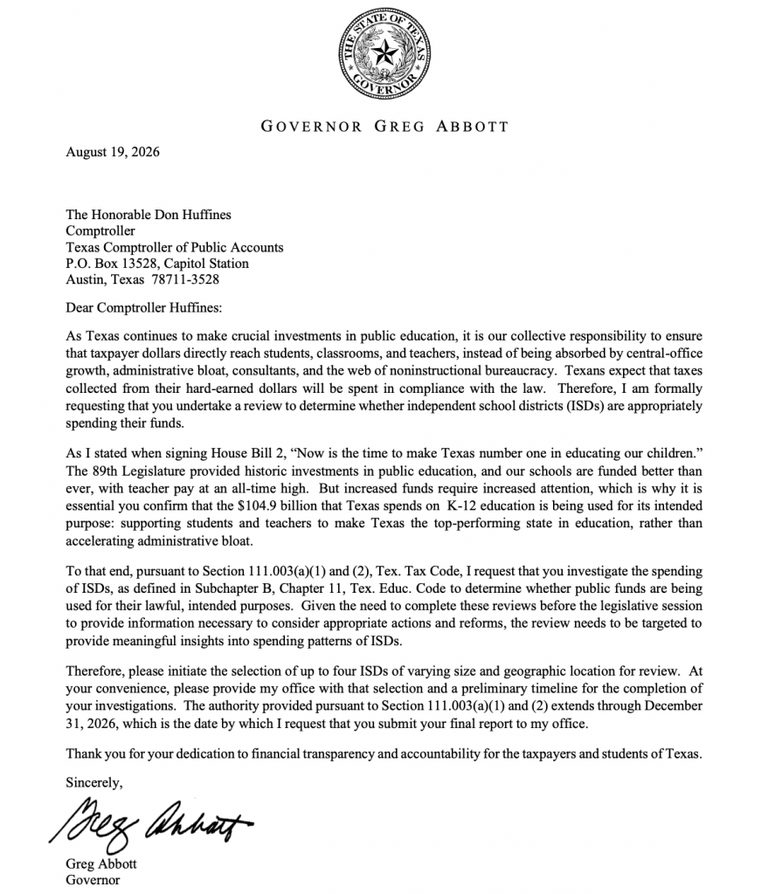
In a letter dated August 19, Governor Greg Abbott formally requested Texas Comptroller Don Huffines to conduct a performance review of up to four independent school districts. The review will focus on whether state education funds are being used for students, teachers, and classrooms rather than expanding central‑office staff, consultants, or other non‑instructional bureaucracy.
Why the review matters
Texas now operates a nearly $105 billion K‑12 budget, the largest in the nation. Abbott emphasized that Texans expect their hard‑earned tax dollars to be spent in compliance with the law and to support direct educational outcomes. He cited concerns that administrative overhead has grown faster than student enrollment and teacher hiring in many districts.
Legal authority and timeline
The governor invoked Section 111.003(a)(1) and (2) of the Texas Tax Code, which permits the comptroller, at the governor’s request, to examine the books and accounts of any public entity handling state funds. Huffines accepted the request the same day and announced a “Huffines Performance Review” that will select districts of varying size and geography, set a preliminary timeline, and deliver a final report by December 31, 2026—just before the 90th legislative session.
Comptroller’s stated goals
Huffines said Texas taxpayers must have confidence that school tax dollars support educational opportunities, not layers of bureaucracy. He pledged a transparent, professional audit that will document any wasteful or inappropriate spending and report findings to both the Legislature and the public.
Background on administrative growth
Analyses over the past decade have shown non‑teaching staff numbers increasing at a rate that outpaces both student enrollment and teacher hiring. Critics argue that this trend diverts resources from the classroom, especially as public school funding has risen nearly 81 % over the last ten years and an additional $27 billion has been added since 2019.
Potential impact
By targeting a sample of districts, the review aims to identify patterns of waste, provide concrete data for lawmakers, and lay the groundwork for reforms that protect taxpayers and improve educational outcomes. While the selected districts have not yet been named, the upcoming report could influence future budgeting decisions and legislative oversight of school finance.
Community response
Parents and local advocacy groups have long voiced concerns about administrative bloat, urging greater accountability for how education dollars are spent. The review aligns with those calls for transparency and may offer a model for routine audits of other government entities.
Texans for Fiscal Responsibility, the organization that published the original announcement, encourages private donors to support its mission of promoting pro‑taxpayer government across the state.
Original reporting: Texans for Fiscal Responsibility — read the source article.